Digital surgical counting platform improves surgical safety in the operating room
Industry
Services
Duration
Team size
About the client
OptiCounts is a healthcare technology company focused on reducing the risk of retained surgical items by digitizing surgical counting workflows in operating rooms.
The company develops a surgical safety platform for hospitals and ambulatory surgery centers that replaces manual counting with a shared, structured digital process designed to fit into existing operating room protocols while making counting more reliable, transparent, and auditable.
The product supports perioperative teams by improving communication between circulating nurses, scrub techs, and surgeons, helping ensure that every counted item is tracked consistently throughout the procedure.
Business challenge
Retained surgical items affect approximately one in 7,500 surgeries in the U.S., with around 5,000 cases reported each year and an average incident cost of $525,000 per hospital. The root cause is simple: manual counting in chaotic operating room environments.
Manual workflows introduce recurring problems. Counts are copied by hand between tally sheets, boards, and records, increasing the likelihood of transcription errors. Even when hospitals follow formal counting policies, the actual process often varies between teams and shifts. In busy operating rooms, communication gaps make it easy for team members to miss updates or rely on outdated numbers. After a procedure, limited visibility makes it difficult to reconstruct what was counted, when discrepancies occurred, and how they were resolved. This lack of a clear audit trail complicates safety reviews and increases organizational risk.
OptiCounts needed a solution that would capture the complete counting workflow — from pre-OP to final verification — while working reliably offline, maintaining strict patient privacy, and supporting a pay-per-surgery business model.
The challenge was to deliver a deployment-ready MVP quickly enough for hospital pilots, while building an architecture and stack capable of scaling across thousands of surgical procedures per year.
Delivered solution
During a three-month discovery and MVP phase, the team worked closely with the OptiCounts founders and clinicians to transform an early concept into a production-ready system.Operating room tablet application
Discovery and workflow design
Through sessions with clinicians and the founding team, the workflow was mapped from pre-operative setup to final verification. These insights were translated into a clear, role-aware interface design optimized for speed, visibility, and low cognitive load in a high-pressure OR environment.
This phase helped define an MVP scope that could be safely used in live surgical environments and ensured that every feature supported existing counting policies rather than forcing staff to adopt new processes.
Operating room tablet application
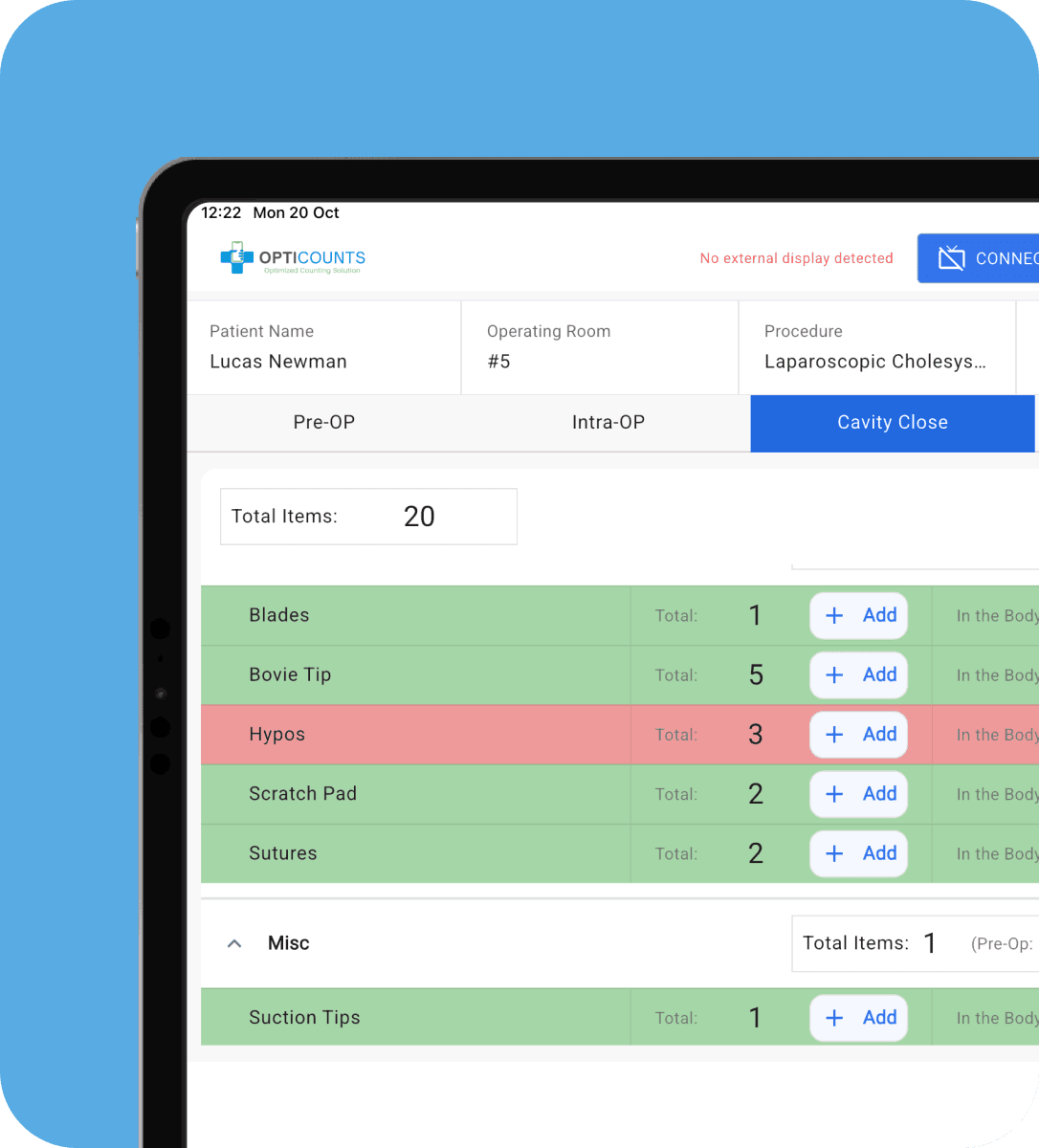
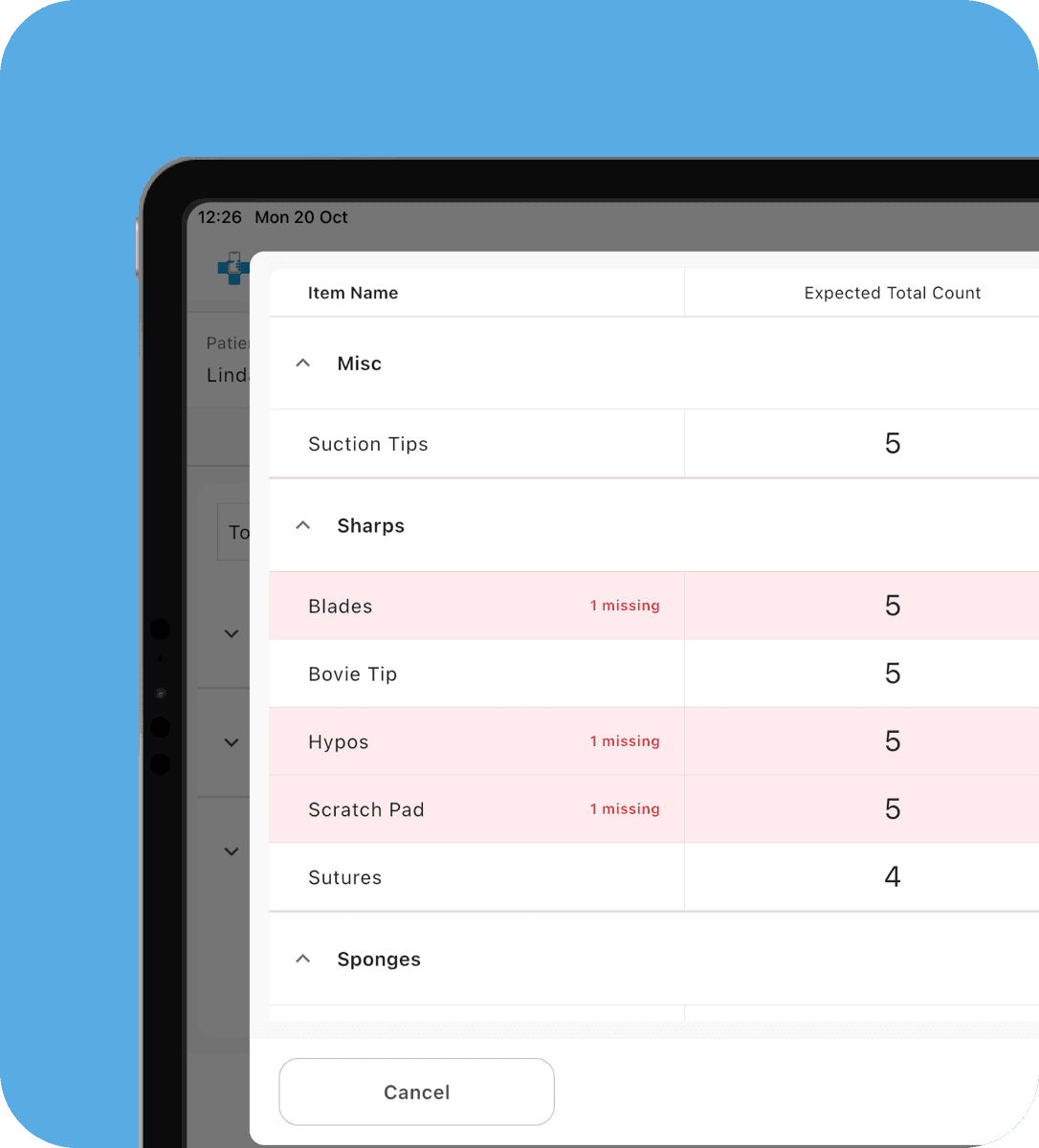
The core of the platform is a Flutter-based tablet application used by authorized OR staff before and during surgery. It supports the full counting lifecycle:
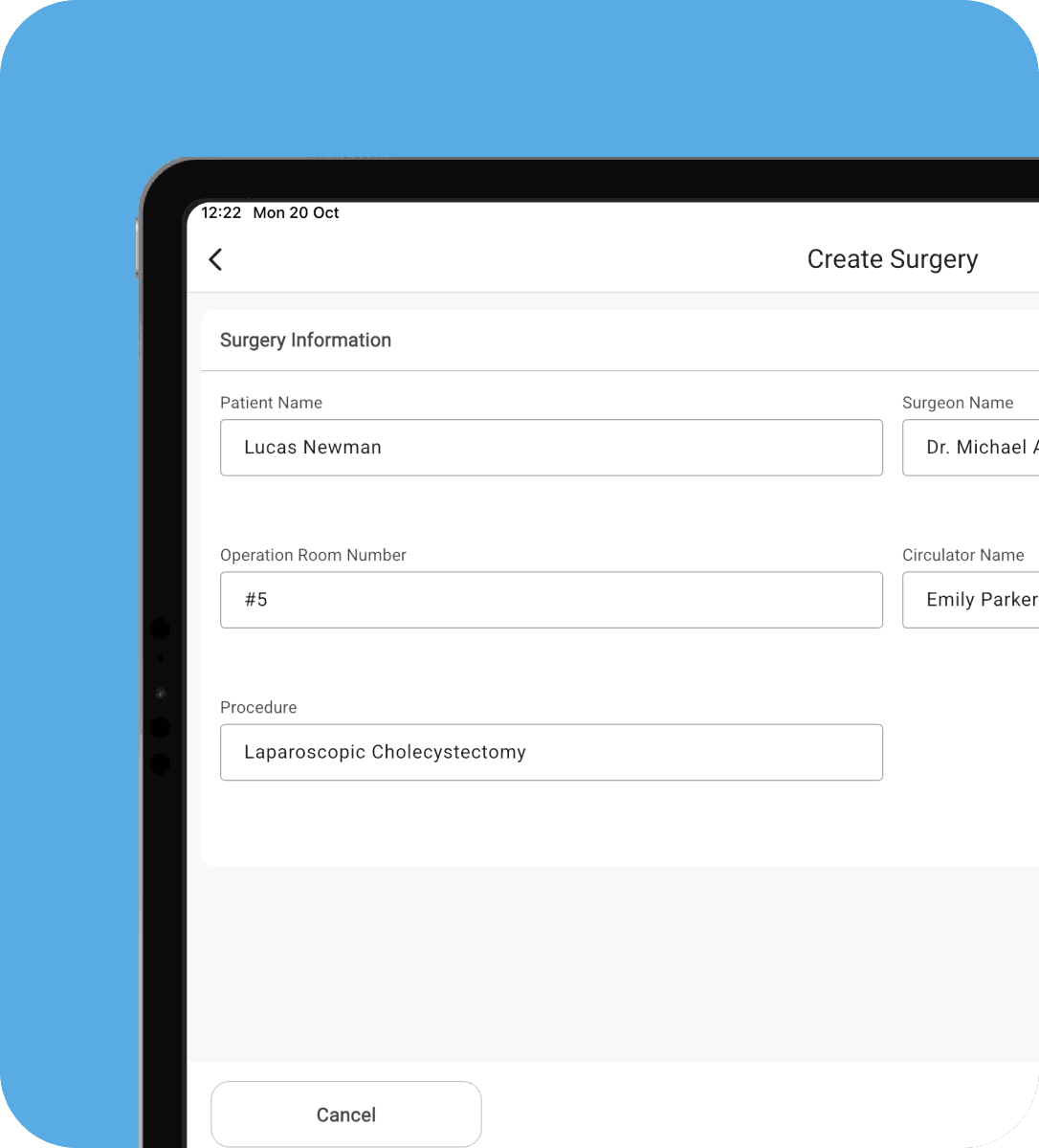
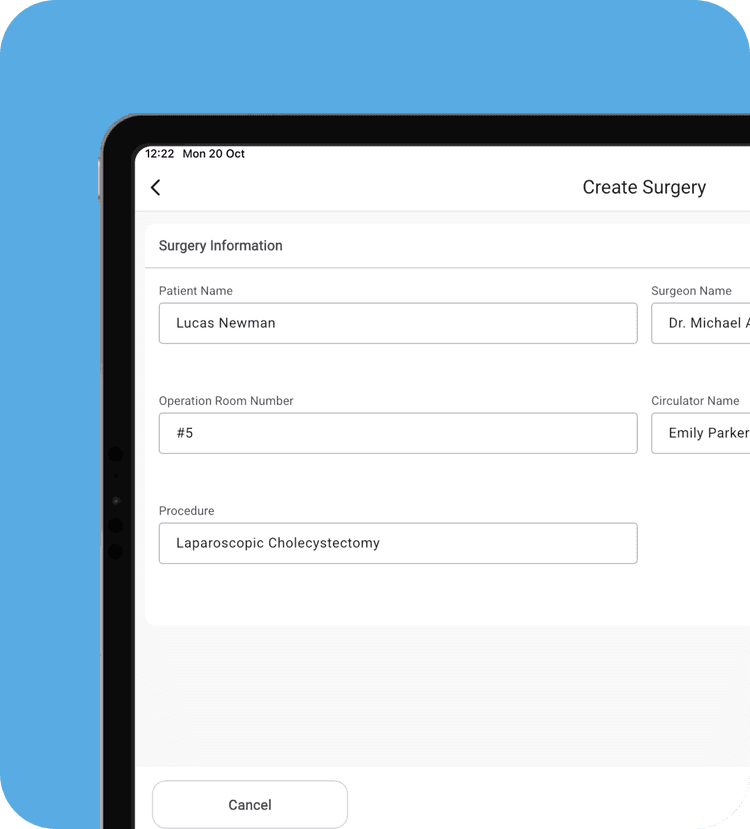
Pre-OP data entry
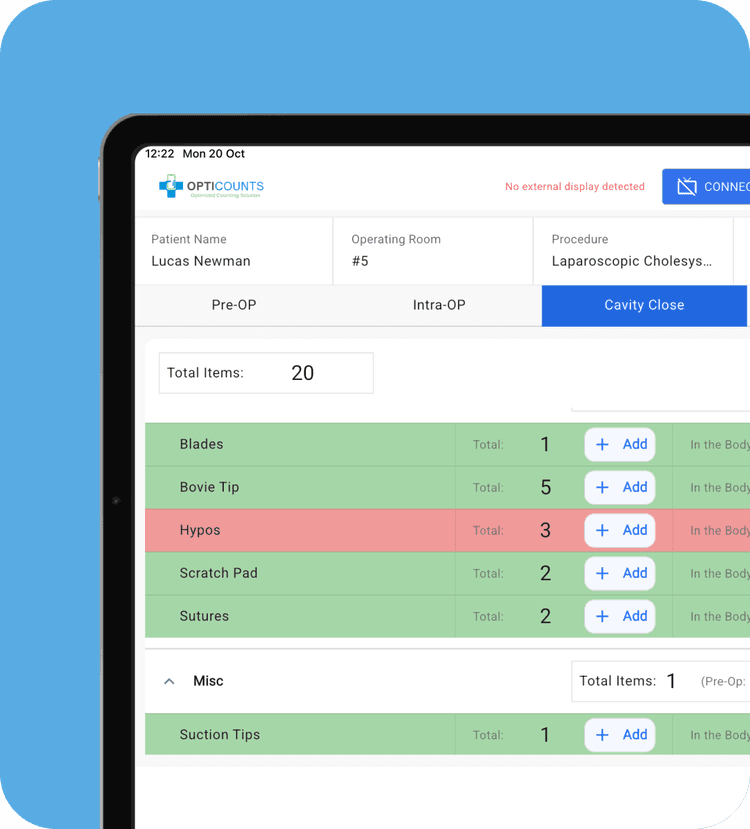
Staff enter key case details such as OR number, surgeon, procedure, and patient name. The system immediately converts the patient name into an anonymized ID, ensuring that no identifiable information is stored or synced.
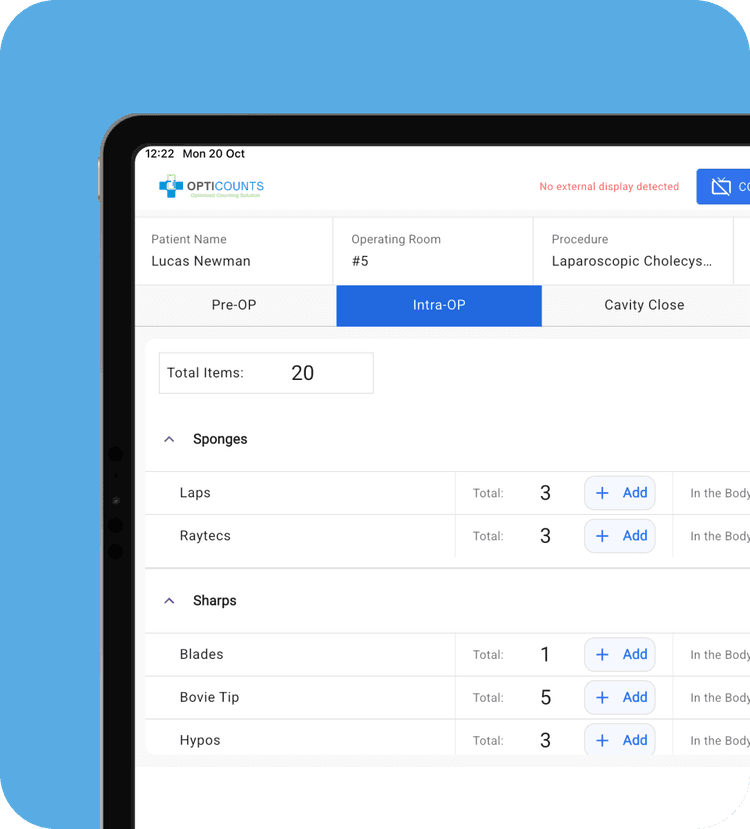
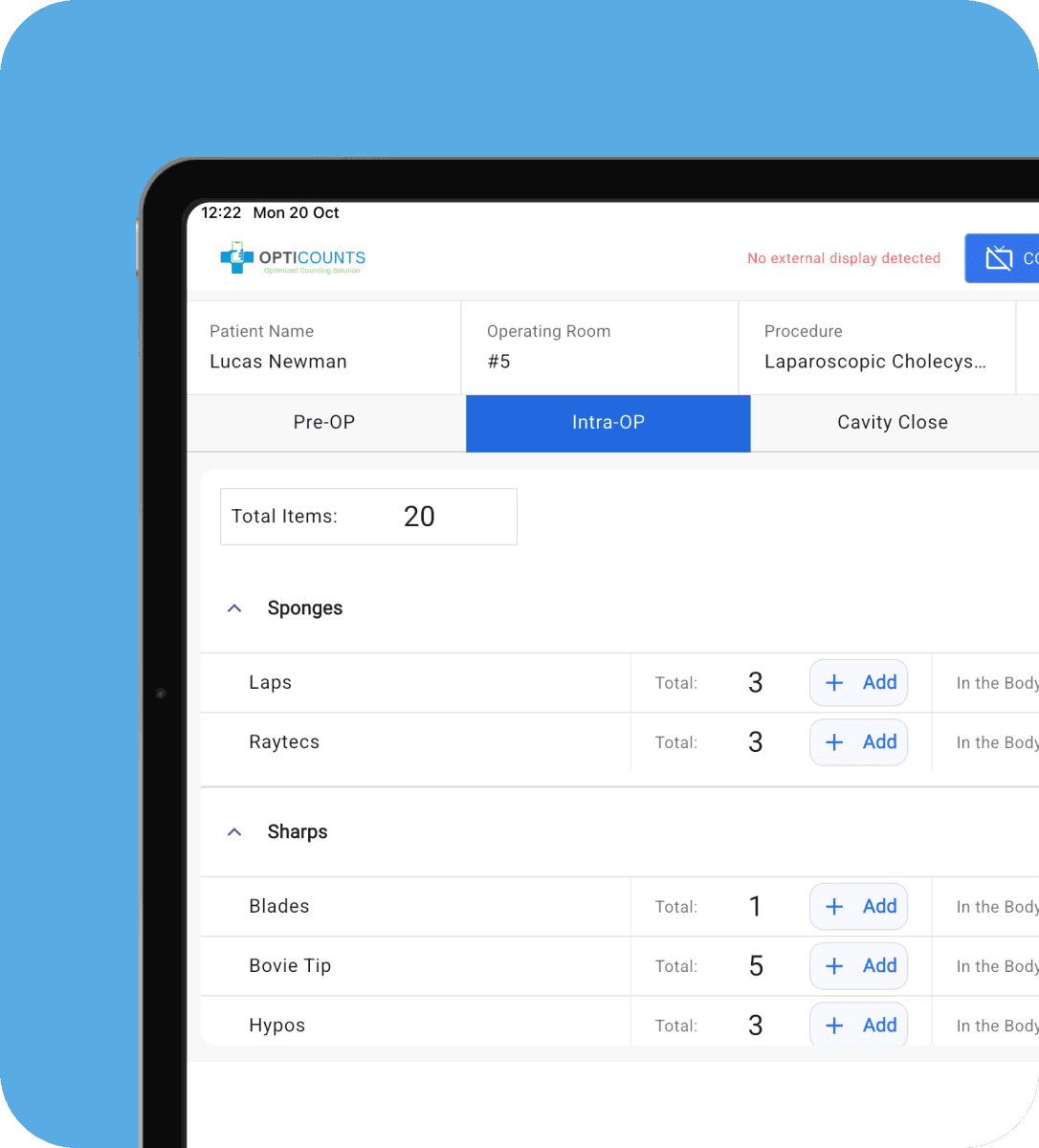
Item categories and counts
Common items are grouped into categories such as sponges, sharps, and miscellaneous, with support for predefined surgery profiles that load typical item lists for a given procedure.
Counting phases
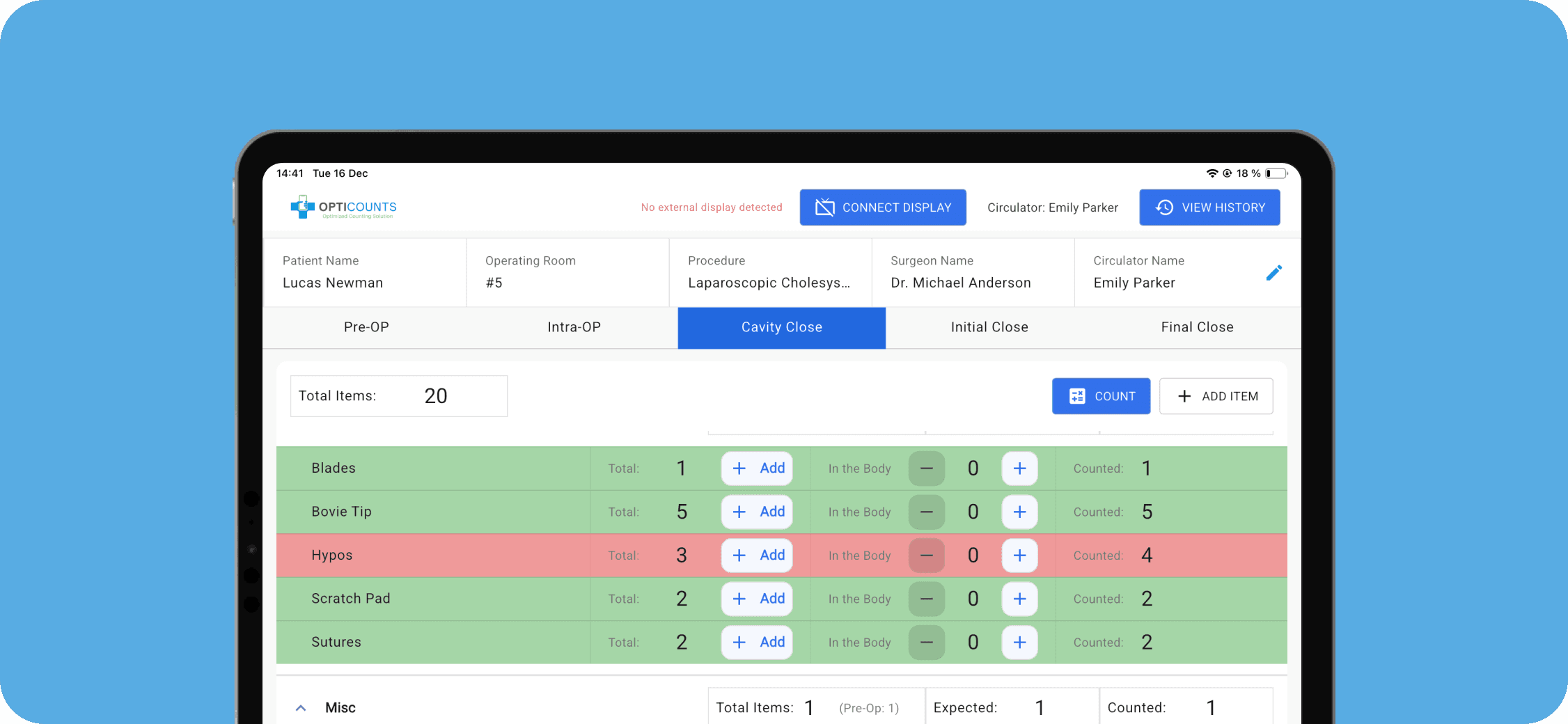
The workflow mirrors standard practice, including initial counts, intraoperative updates, cavity closing counts, and final verification.
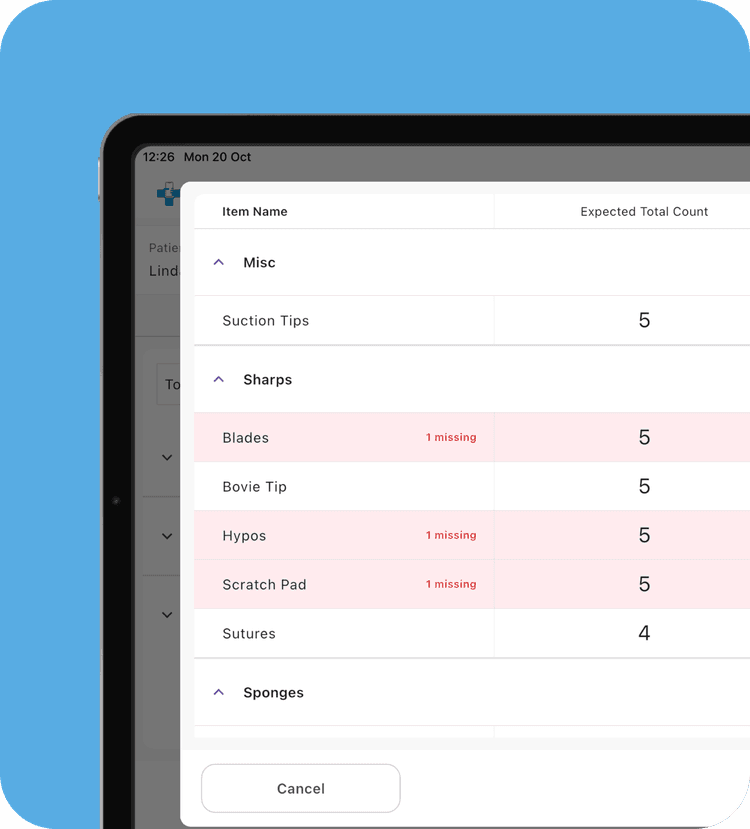
Balance alerts
When counts do not reconcile, the system highlights the discrepancy and guides staff through resolution options such as item found, planned retention, or item not found.
To support OptiCounts’ business model, Orangesoft delivered a lightweight admin panel.
This tool enables OptiCounts managers to control clinic access, track procedure volumes, and export usage data for billing, without exposing any patient or clinical details.
Shared display board
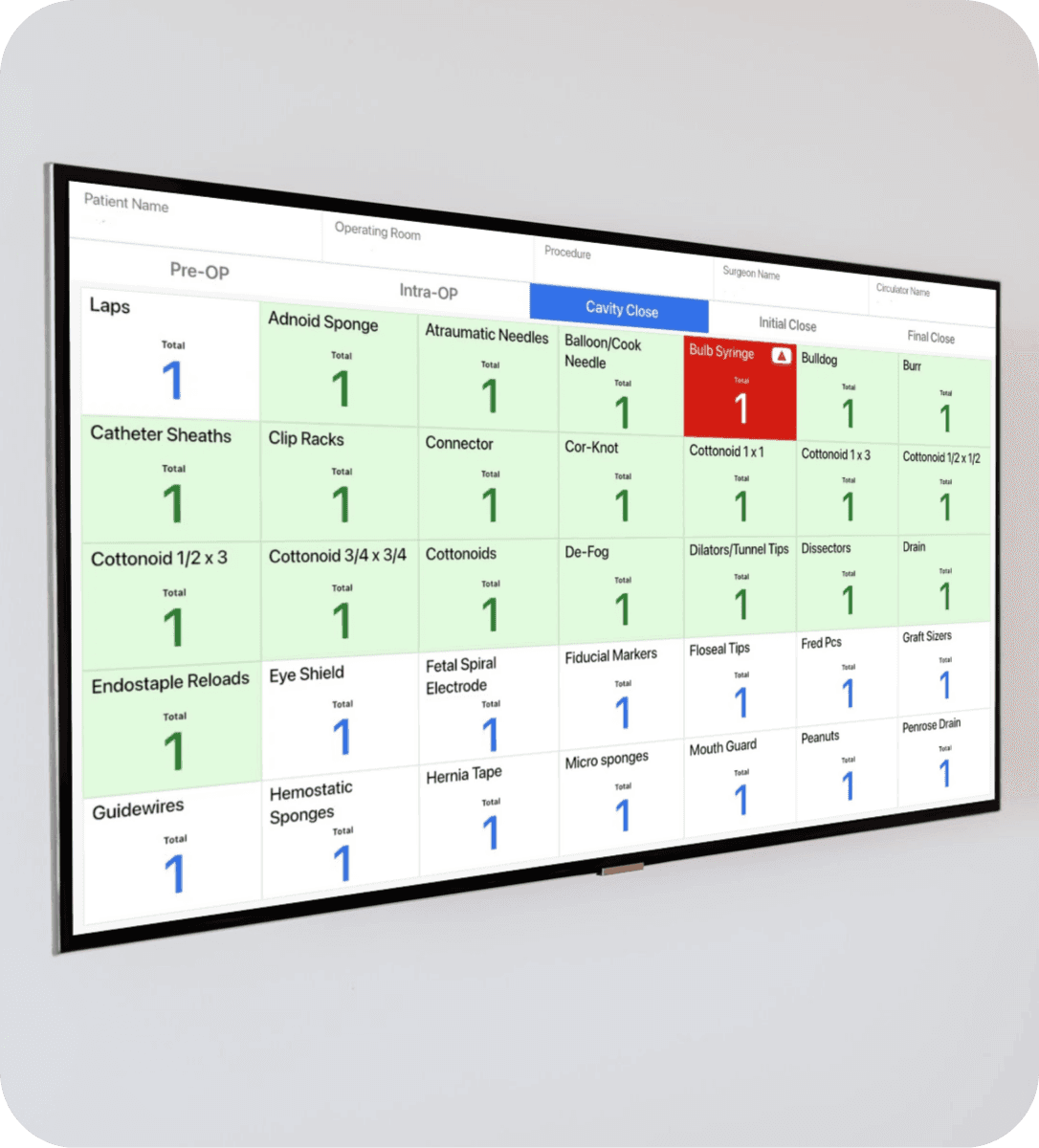
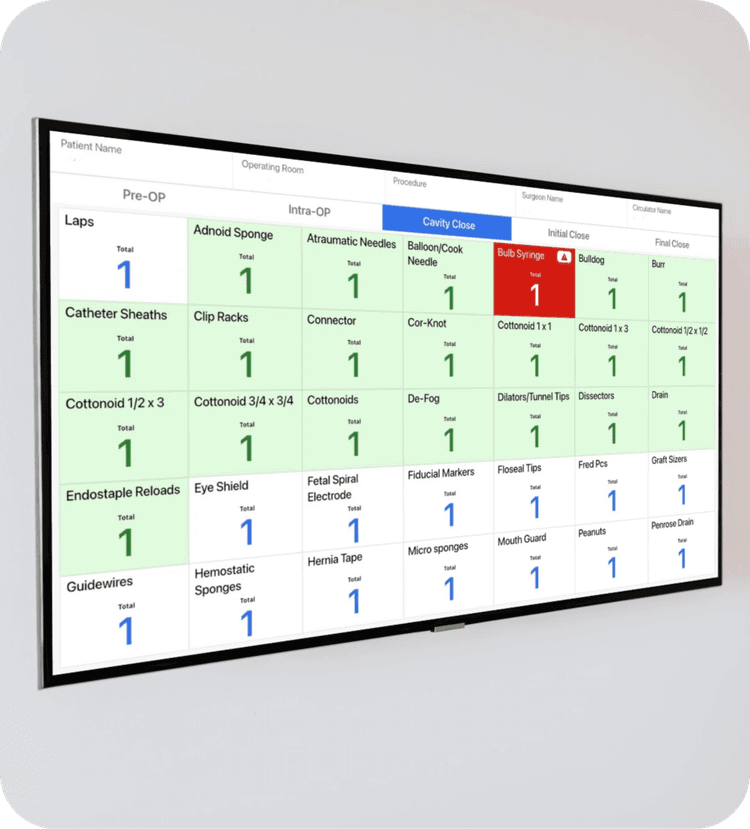
OptiCounts also includes a read-only display board that shows live item counts and alerts for the entire operating room. Updates appear in real time, giving all team members a single, shared view of the current count and reducing reliance on verbal callouts or manual updates.
Privacy-first architecture and audit trail
Every action in the counting workflow is logged locally and synced to the Supabase backend when connectivity is available. For each case, OptiCounts maintains:
• Anonymized case ID and operation details
• Complete item count records with timestamps
• History of balance alerts and resolutions
Patient details are transformed into non-identifiable case IDs immediately at entry. No protected health information is stored in the system or accessible through internal tools. This design allows hospitals to pilot the MVP without complex compliance onboarding, while providing a clear path for future HIPAA-compliant hosting if deeper clinical integrations are required.
Project results
OptiCounts launched a deployment-ready MVP that digitizes surgical counting without disrupting established operating room workflows.
In just three months, the product moved from concept to a stable platform ready for use in live operating rooms. The MVP reflects real clinical routines, allowing hospitals to pilot the solution without retraining staff or changing existing counting policies.
By providing a shared, up-to-date view of surgical counts, OptiCounts reduces ambiguity in the operating room and supports clearer coordination between nurses, technicians, and surgeons.
Product development continues as OptiCounts expands functionality and prepares for broader hospital adoption. Orangesoft remains engaged in ongoing development, iterating on the platform based on early feedback and evolving clinical and operational requirements.
Kickstart your digital journey today!
Add your brand's success story to our global list of disruptive brands.
Join the clubWe're trusted by:
- 1. Intro callDuring a 30-minute meeting, our domain expert dives into your business and describes the steps for future collaboration.
- 2. Free discovery workshopTogether with you, our technical team defines the user flow, feature list, and project risks.
- 3. Project planningWe provide the implementation plan, timelines and estimations for your project.