
The top 20 healthcare app development companies, selected for full-cycle development, expertise in AI, data engineering and IoT, a proven healthcare track record and compliance experience (HIPAA, FDA, MDR, GDPR, ISO standards), include Revolve Healthcare, Orangesoft, Limeup, Light-it, Miquido and Topflight Apps. Most charge $50-$99 per hour, with inVerita and Empeek at $25-$49 and Topflight Apps and HTD Health at $100-$149, and minimum project sizes run from $5,000 (Litslink) to $100,000 (HTD Health). Developing a healthcare app from scratch costs $70,000-$350,000 on average.
Technology, including mobile apps, has dramatically transformed the healthcare industry. Digital health apps, remote patient monitoring, virtual consultations, patient portals, medical records, and other digital health solutions have become essential tools that many healthcare specialists and individuals use daily.
By 2030, the digital health market is projected to surpass $946 billion, growing at a rate of 22.2% from 2025. No wonder aspiring startups want to dip their toes into this dynamic market and develop innovative healthcare solutions that change the lives of doctors and patients. If you're an entrepreneur, you're probably on the lookout for a trusted healthcare app development partner to bring your health tech project to life.
Finding the ideal healthcare mobile app development tech partner can feel like a tough nut to crack, given the vast number of options. To help you secure the right team of healthcare app developers, we've curated a list of the leading healthcare mobile app development companies on the market. Let's have a closer look at these companies to help you determine which one is right up your alley.
The criteria and methodology we used to select the top healthcare app development partners
To make sure our list is not subjective and we've shortlisted well-fit development teams, we evaluated companies based on a set of clearly defined criteria. Our goal was to highlight partners with proven healthcare expertise, strong technical capabilities, and a solid reputation in the digital health market.
Here are the main factors we considered:
- Full-fledged app development capabilities — we focused on companies that can cover the entire process of developing a healthcare app, whether native or cross-platform, including fast prototyping, design, testing, and other aspects.
- Well-versed in complementary technologies — since healthcare app development often goes hand in hand with AI, data engineering, IoT capabilities, and other advanced capabilities, we've also filtered the companies by their expertise in advanced tech.
- Healthcare focus — although not all shortlisted companies are focused exclusively on the healthcare domain, they all have a proven track record of delivering healthcare applications.
- Compliance and security — selected vendors demonstrate hands-on experience in HIPAA, FDA, MDR, GDPR, and other regulations and align their development workflows with ISO standards.
Revolve Healthcare
Founded: 2015
Number of employees: 50+
Minimum project size: $10,000+
Hourly rates: $50 – $99
Offices: Poland
Clutch rating: 4.9
Revolve Healthcare provides full-cycle healthcare app development services with a focus on mobile apps, web development, and integrated IT systems. With a team of over 50 medical app developers, Revolve Healthcare offers end-to-end tech expertise that stretches from product design to compliance and usability consultations.
Revolve Healthcare's digital products meet the high standards of patient data security and are developed in line with standards like MDR, IVDR, and FDA. Overall, the company is known for building patient-first, technology-driven healthcare solutions across the healthcare and pharma continuum.
Pros:
- Revolve Healthcare is an ISO-13485 certified medical software development company.
- The company specializes in high-risk medical product engineering, including healthcare apps that are subject to EU CE and FDA approvals.
- Provides post-release maintenance, monitoring, and technical support.
Cons and trade-offs:
- Team size (50+ engineers) may not suffice the needs of large enterprise projects.
Orangesoft
Founded: 2011
Number of employees: 100+
Minimum project size: $50,000+
Hourly rates: $50 – $99
Offices: Poland, US
Clutch rating: 4.9
Orangesoft is a healthcare app development company with 15 years in the market and 300+ projects. The company specializes in health tech and supports innovative companies in developing impactful, compliant, and secure solutions that solve the challenges of modern healthcare. Orangesoft's expertise spans various health tech solutions, including telemedicine platforms, virtual hospital solutions, remote patient monitoring software, wellness apps, IoMT solutions, and more.
As a tech partner committed to the right balance between security, innovation, and interoperability, Orangesoft develops software in line with the best practices outlined in ISO 27001, IEC 62304, ISO 13485, SOC2, and other frameworks. The company also has hands-on experience with healthcare regulations, including HIPAA, HITECH, FDA, and MDR.
Along with 360-degree development services, Orangesoft assists companies in strategizing product roadmaps and optimizing existing solutions. What differentiates this company is its network of health tech experts, startups, and strategic partners, which Orangesoft's clients can tap into to grow their businesses and secure funding opportunities.
Pros:
- Orangesoft has longstanding, hands-on experience (over 15 years) in developing healthcare applications, both web- and mobile-based ones.
- The company follows ISO-aligned software development and security workflows to make sure the application is audit-ready.
- Orangesoft is also experienced in developing healthcare applications that may require compliance considerations, such as HIPAA, GDPR, FDA, MDR, and others.
- Orangesoft has a proven track record of developing 300+ applications, including telemedicine apps, patient remote monitoring platforms, and wearable applications.
Cons and trade-offs:
- The team size implies that the team might not have enough capacity to take on enterprise-level projects.
Limeup
Founded: 2019
Number of employees: 40+
Minimum project size: $10,000+
Hourly rates: $50 – $99
Offices: UK
Clutch rating: 5.0
Limeup collaborates with healthcare providers, startups, and established healthcare companies that expect precision and reliability from their digital products. The team combines technical depth with a firm command of regulatory frameworks, delivering software that fits real clinical workflows.
After 7 years in the field, their portfolio includes telemedicine platforms, hospital management systems, and specialized medical applications. A recent highlight is Raccoon.Recovery, where Limeup rebuilt the core experience and helped the startup secure a €700,000 grant to grow their health initiative.
Pros:
- Demonstrated experience in remote patient monitoring platforms and appointment scheduling systems.
- High client satisfaction signals (≈ 5.0 rating in public directories), though the sample size is limited.
- Strong focus on clinical workflow alignment, meaning solutions are designed to support real medical operations rather than only consumer-facing UX.
Cons and trade-offs:
- The company's portfolio is less diverse compared to other vendors, which may indicate less exposure to diverse healthcare subdomains.
- Publicly available case studies are not very detailed, which makes it harder to evaluate their development expertise and process.
Light-it
Founded: 2019
Number of employees: 150+
Minimum project size: $50,000+
Hourly rates: $50 – $99
Offices: Uruguay, Argentina
Clutch rating: 5.0
Featured among the fastest-growing companies by the Financial Times, Light-it is a pure-play healthcare app development company with 6 years of hands-on experience. Light-it delivers web and mobile healthcare apps in all flavors — and its portfolio of over 70 products is vivid proof of this.
As for the company's expertise, Light-it lends a tech edge to tech-driven companies and healthcare providers, delivering actionable insights for product strategy, interoperability, design, patient data safety, and more. Digital health startups, clinics, and health tech companies can also leverage the company's full-cycle healthcare app development services to build medical apps and other innovative solutions from scratch.
Pros:
- Proven experience in full-cycle healthcare product development, from strategy and design to deployment.
- Quite a large and growing team of 150+ tech experts that can deliver on mid-to-large digital health projects.
- Recognized as one of the fastest-growing companies in global tech rankings (e.g., Financial Times growth lists).
Cons and trade-offs:
- Although the team is experienced, the company comes across more as a product development partner, as opposed to a regulated medtech engineering vendor.
- Light-it's team is distributed across Uruguay and Argentina, which may require more coordination for some clients from Europe or North America.
Miquido
Founded: 2011
Number of employees: 150+
Minimum project size: $25,000+
Hourly rates: $50 – $99
Offices: Poland
Clutch rating: 4.9
Miquido is a Google-certified software development company from Poland, specializing in bespoke healthcare digital solutions that combine advanced technology with user-centric design. With over a decade of experience, the company builds healthcare products that meet user needs and address business challenges.
The company is particularly strong in creating secure, compliant healthcare apps focused on remote monitoring, patient engagement, and medical data management. Miquido is best suited for healthcare organizations aiming to improve patient outcomes, as well as businesses across industries looking to innovate through user-centric digital solutions.
Pros:
- Miquido has been in the trenches of software product development for over a decade, which indicates the team's deep understanding.
- The company has a proven track record of developing remote patient monitoring, medical data management, and digital patient platforms.
- Google-certified partner status signals competency in modern technology standards and development practices.
Cons and trade-offs:
- According to the publicly available information, the company doesn't specialize in deep regulatory lifecycle engineering, such as SaMD development, validation, and certification documentation.
- The team positions itself more as a digital product development partner rather than a strictly clinical-grade medical software development vendor.
Topflight Apps
Founded: 2016
Number of employees: 180+
Minimum project size: $50,000+
Hourly rates: $100 – $149
Offices: US
Clutch rating: 4.9
Next up is Topflight Apps, a custom healthcare application development company with a proven track record of delivering user-friendly healthcare apps and fintech mobile solutions for companies of all sizes. The expertise of the company's health app developers lies in crafting web and mobile applications, including enterprise healthcare products and non-profit healthcare services, that address complex challenges and improve health outcomes.
Topflight Apps' services include Agile development, rapid prototyping, and electronic health records (EHR) integration. Its team of healthcare mobile app developers combines deep industry knowledge with advanced technologies, such as generative AI, to build scalable and secure solutions tailored to the specific needs of the healthcare industry.
Pros:
- Topflight Apps can do the heavy lifting of end-to-end healthcare app development, from accessible design through launch and post-launch support.
- The company speaks of itself as an AI-powered healthcare app developer, with experience in connected health integrations (like HL7/FHIR, SMART on FHIR, EHR integrations).
- Ranked highly in Clutch awards.
Cons and trade-offs:
- Developer rates are more on the pricier side - $100-$149.
- Some clients mention timeline adjustments and cost considerations, which may happen during complex, iterative projects, but are important to keep in mind.
Litslink
Founded: 2014
Number of employees: 240+
Minimum project size: $5,000+
Hourly rates: $50 – $99
Offices: US, Ukraine
Clutch rating: 4.8
Litslink takes a one-stop approach to software development, helping healthcare providers develop tailored healthcare digital solutions from A to Z. With over a decade of experience and dozens of delivered projects, the company develops secure, scalable, and standards-compliant platforms, including chronic disease management solutions, admin tools, remote patient monitoring apps, mHealth apps, and more.
What differentiates this company is its high-touch service. Litslink doesn’t go with cookie-cutter solutions — the company goes an extra mile to select fit-for-purpose technologies, frameworks, and integrations for each project.
Pros:
- The company's team of 240+ engineers can support mid-scale and larger product initiatives.
- LitsLink offers a relatively low minimum project entry cost of $5,000, which can be attractive for startups testing early product ideas.
Cons and trade-offs:
- Publicly available information does not strongly suggest that Litslink specializes in deep clinical regulatory engineering, such as full SaMD lifecycle validation or comprehensive medical device certification documentation.
Pragmatic Coders
Founded: 2014
Number of employees: 60+
Minimum project size: $25,000
Hourly rates: $50 – $99
Offices: Poland
Clutch rating: 4.8
One of Pragmatic Coders’ core strengths is healthcare software development. Since 2014, their team of 60+ professionals has delivered innovative digital solutions combining regulatory compliance with usability. They build telemedicine apps, patient portals, medical billing software, and engagement platforms, always ensuring data security and HIPAA compliance.
The company acts as a true business partner, not just a code provider. Their process starts with product workshops and MVP development, letting clients validate ideas quickly before scaling. Trusted by over 100 clients, they’ve helped bring products to millions of users, consistently delivering tangible outcomes in complex industries like healthcare.
Pros:
- Solid experience in healthcare app development, including telemedicine apps, patient portals, and engagement solutions.
- Adheres to HIPAA-aligned data protection practices when developing a healthcare software solution.
Cons and trade-offs:
- Enterprise-level healthcare software projects are less prominently featured in open case studies.
Momentum
Founded: 2016
Number of employees: 70+
Minimum project size: $50,000
Hourly rates: $50 – $99
Offices: Poland
Clutch rating: 4.9
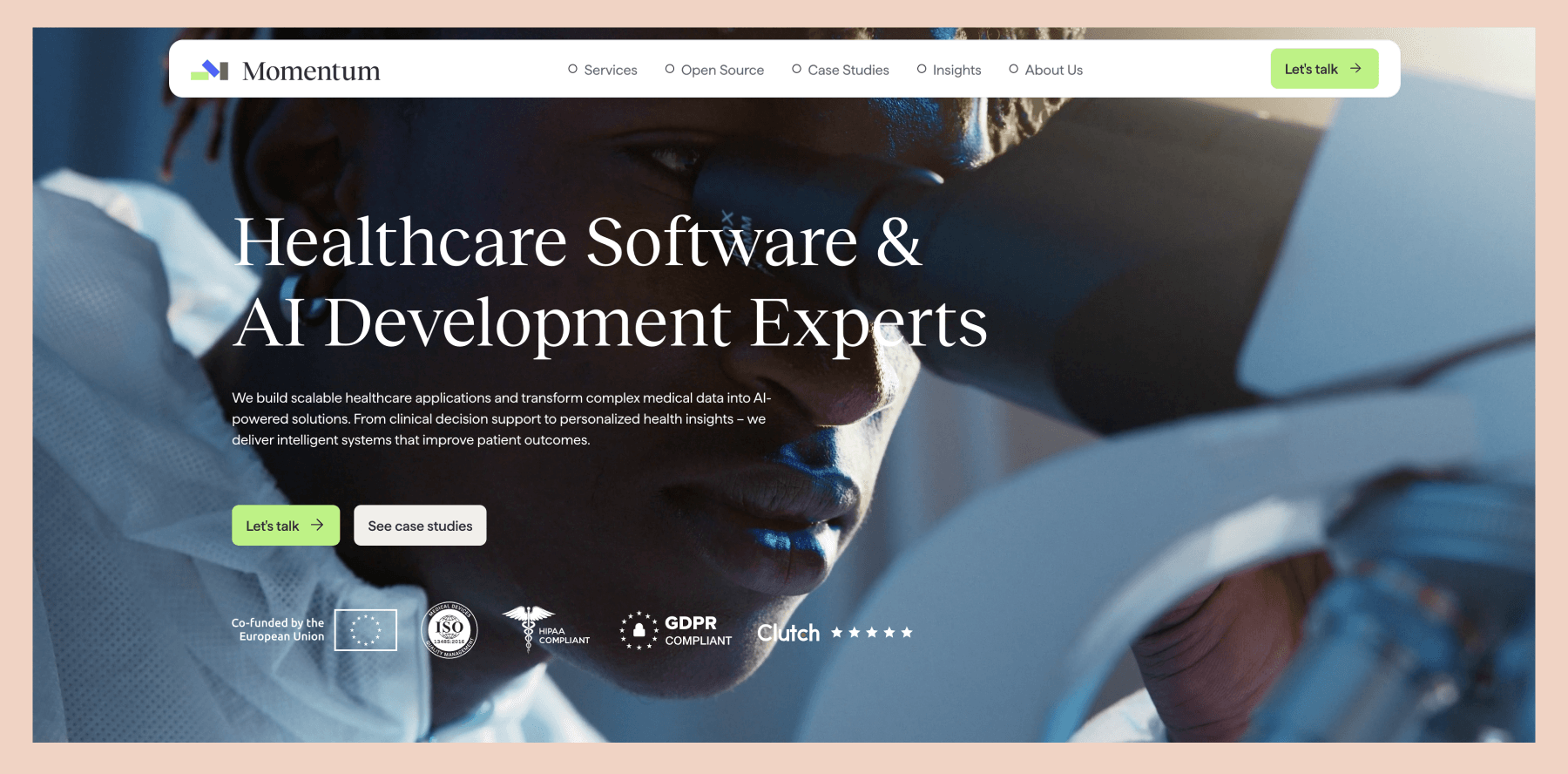
Momentum is a Poland-based full-stack digital agency credited with developing over 220 projects to date. Featured in the "FT 1000", Momentum has established itself as one of the top medical app development companies with a strong focus on innovation and client satisfaction. The company supplies a comprehensive suite of solutions, including healthcare cloud solutions, telemedicine apps, IoT healthcare software, health monitoring apps, and more.
Along with time-tested technologies, Momentum implements AI-powered healthcare app features to create impactful products that enable better and data-informed care. From startups to established enterprises, Momentum combines its commitment to quality with its agile development methodology to deliver exceptional results for all clients.
Pros:
- The company has been recognized in growth rankings such as the Financial Times FT 1000 list.
- Momentum is focused exclusively on the healthcare industry.
Cons and trade-offs:
- The current team size (~70+ engineers) may require careful capacity planning for very large enterprise healthcare transformation programs.
Scopic
Founded: 2006
Number of employees: 230+
Minimum project size: $10,000+
Hourly rates: $50 – $99
Offices: US, Singapore, Australia
Clutch rating: 4.9
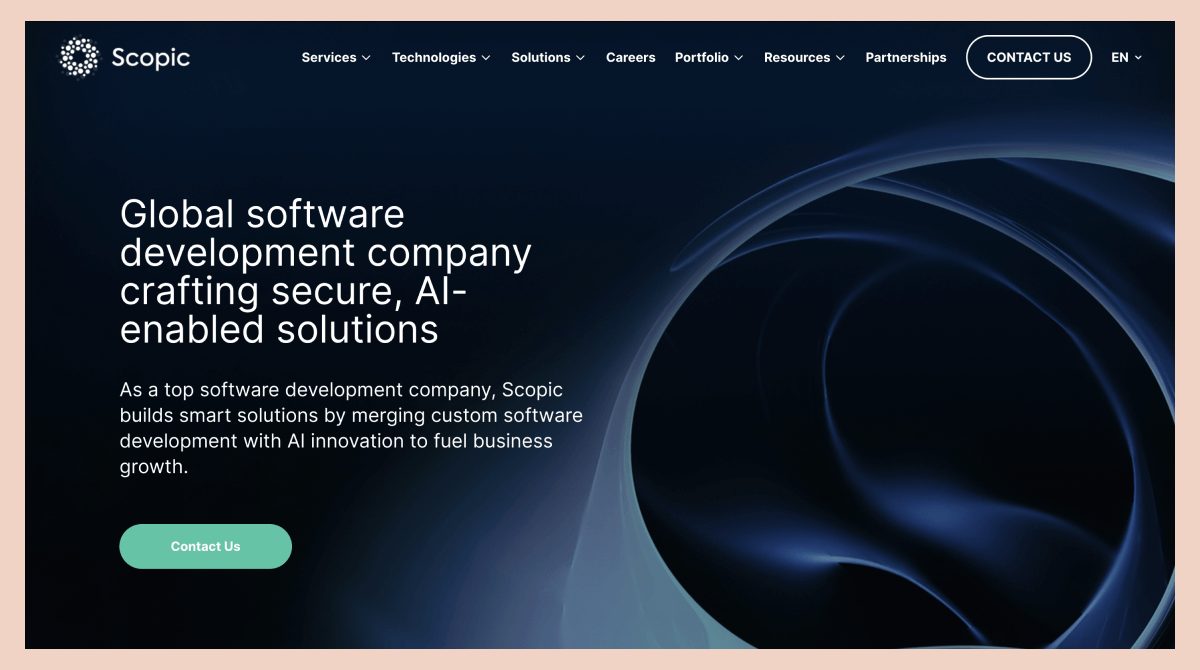
Scopic is an AI-enabled healthcare app development partner with a track record of over 1,000 successful products and about 20 years of experience in software development. The company has earned its stripes as an all-in tech partner for healthcare companies whose expertise ranges from simple appointment scheduling tools to AI-powered digital health solutions.
With practical experience in HIPAA, GDPR, and other healthcare standards, Scopic develops secure healthcare applications that protect patient data with precision and care. Beyond from-scratch development, the team can also bridge the gap between legacy healthcare systems and newer applications to keep clinical workflows working without interruption.
Pros:
- Scopic has a nearly two-decade long development experience and over 1,000 delivered products across industries, including healthcare.
- The company is known for building AI-driven healthcare solutions, ranging from scheduling systems to more advanced digital health platforms.
- The team can handle legacy system modernization.
Cons and trade-offs:
- While the company has healthcare experience, it is not a pure-play healthcare tech partner, which means some projects may tap into broader cross-industry development expertise rather than deep niche specialization.
ZoolaTech
Founded: 2017
Number of employees: 450+
Minimum project size: $50,000+
Hourly rates: $50–$99
Offices: US, Poland, Mexico, Turkey
Clutch rating: 5.0
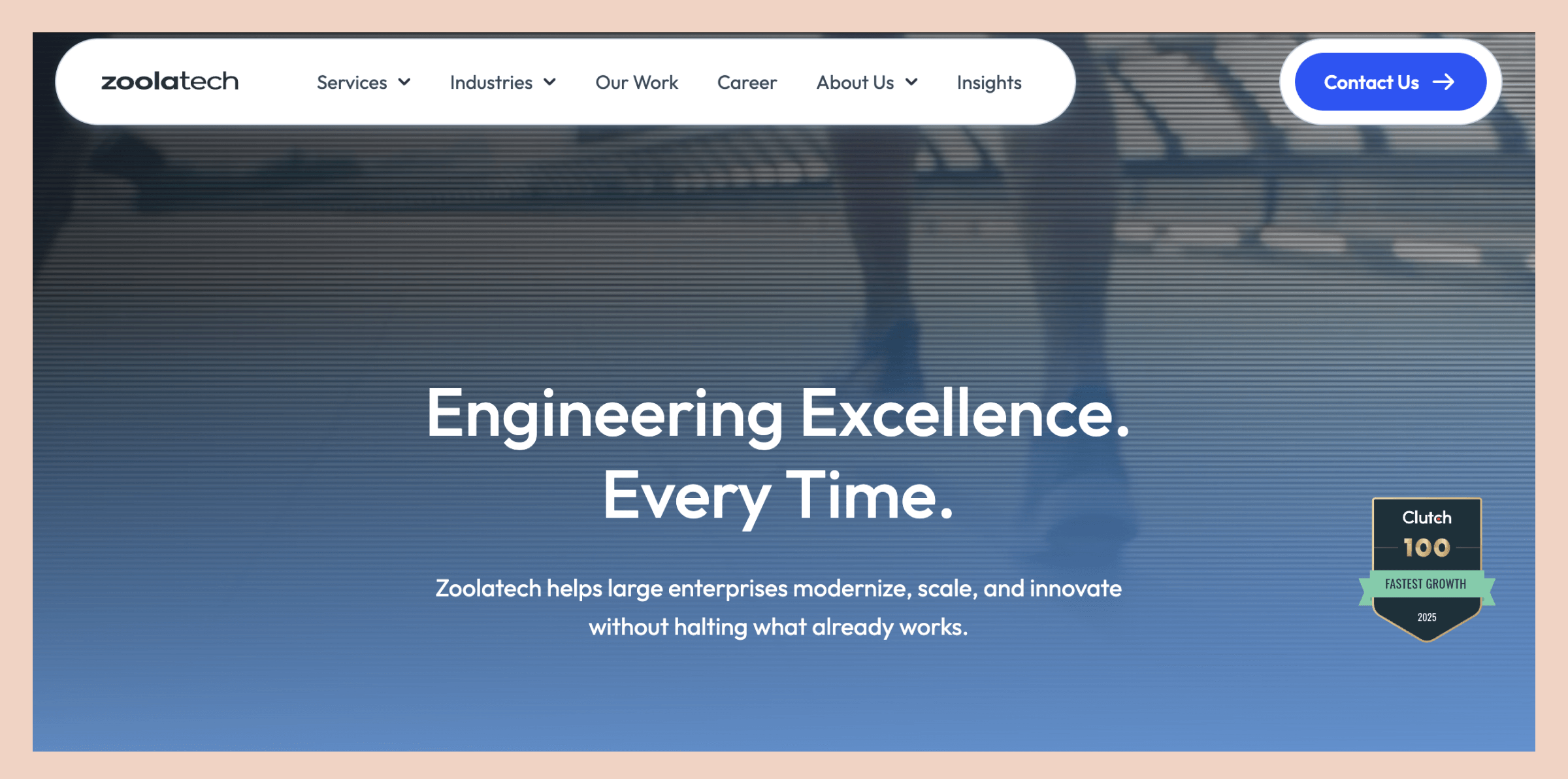
ZoolaTech is a software development company that provides end-to-end product development and modernization services for companies in the healthcare and life sciences domains. The company builds secure and scalable digital health products focused on measurable outcomes, such as operational efficiency, improved patient engagement, and data-driven decision making.
ZoolaTech delivers interoperable EHR/EMR platforms, telehealth and remote care solutions, and patient engagement tools, all with a strong focus on cybersecurity and compliance aligned with HIPAA and GDPR requirements. Their expertise also includes patient data protection, cross-platform app development, AI/ML and healthcare data analytics, and cloud infrastructure modernization.
Pros:
- Large engineering capacity of over 450 tech experts, which makes ZoolaTech well-equipped for delivering enterprise-scale healthcare apps.
- Broad technical expertise in AI/ML, healthcare data analytics, and cloud infrastructure modernization, which supports more advanced digital health solutions.
Cons and trade-offs:
- Although ZoolaTech has a strong foothold in healthcare and life sciences, it is not exclusively focused on the industry.
inVerita
Founded: 2015
Number of employees: 120+
Minimum project size: $50,000+
Hourly rates: $25 – $49
Offices: US, Poland, Ukraine
Clutch rating: 4.9
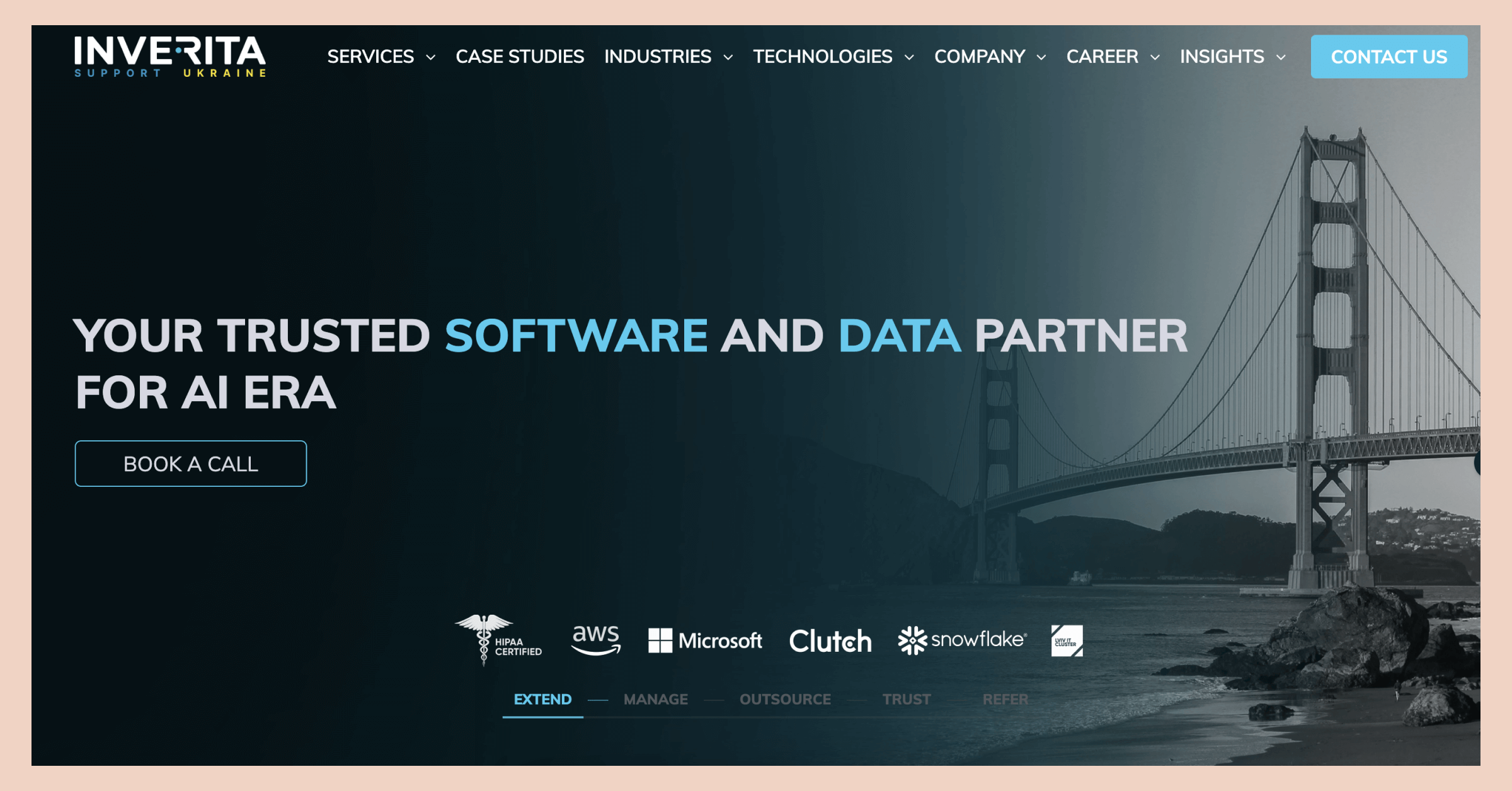
inVerita is an experienced digital health software development and staff augmentation company, known for delivering scalable telehealth platforms, patient engagement tools, EHR/EMR systems, and other tailored solutions. While not exclusively healthcare-focused, 63% of inVerita's portfolio is dedicated to healthcare and life sciences projects.
The company’s tech stack is a combination of proven technologies like JavaScript and .NET and advanced solutions such as AI, machine learning, IoT, and cloud-native architectures.
Pros:
- Along with competitive pricing, inVerita also has good quality of deliverables and underlying code.
- The company has solid expertise in healthcare-related systems, including data workflows, reporting, and BI solutions.
Cons and trade-offs:
- Like many other healthcare app development companies in our list, inVerita works across multiple industries, as opposed to being focused on healthcare only.
- Available information suggests less indication that it focuses heavily on deep clinical regulatory lifecycle engineering.
BGO Software
Founded: 2008
Number of employees: 80+
Minimum project size: $10,000
Hourly rates: $50 – $99
Offices: UK, Bulgaria
Clutch rating: 4.8
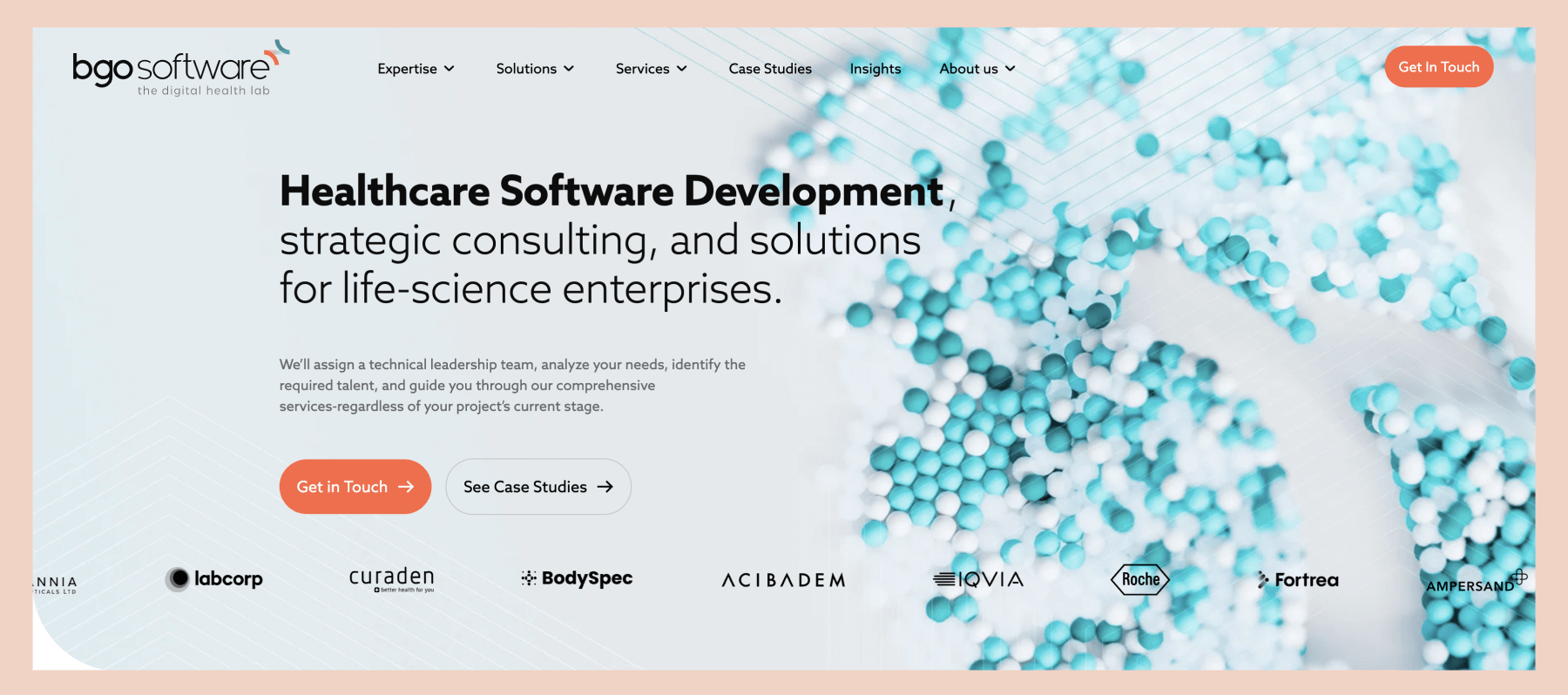
Over the last 18 years, BGO Software has evolved from a boutique IT firm to a team of experienced healthcare app developers with over 120 projects and a global footprint. BGO Software develops healthcare systems of all kinds — from clinical research solutions to eHealth tools and GMP validated systems for pharmaceutical & biotech companies. All solutions are fully compliant with healthcare requirements, including HIPAA, FDA, PCI, GDPR, and other standards.
Along with end-to-end medical mobile app development, BGO Software also offers CTO-as-a-service expertise, staff augmentation services, and product discovery sessions. The company's tech stack is quite diverse, enabling them to deliver tailored solutions for complex healthcare challenges and successful project outcomes.
Pros:
- The company shows a strong regulatory compliance orientation (HIPAA, FDA, GDPR, PCI).
- The team is a good fit for validated healthcare + life sciences software.
- The vendor offers CTO-as-a-service, which is useful for early technical strategy.
Cons and trade-offs:
- Boutique-style delivery may sometimes indicate potential dependency on key engineers.
- The team of 80+ tech experts might not be enough for large, parallel initiatives.
HTD Health
Founded: 2016
Number of employees: 140+
Minimum project size: $100,000
Hourly rates: $100 – $149
Offices: Poland, US, Argentina
Clutch rating: 5.0
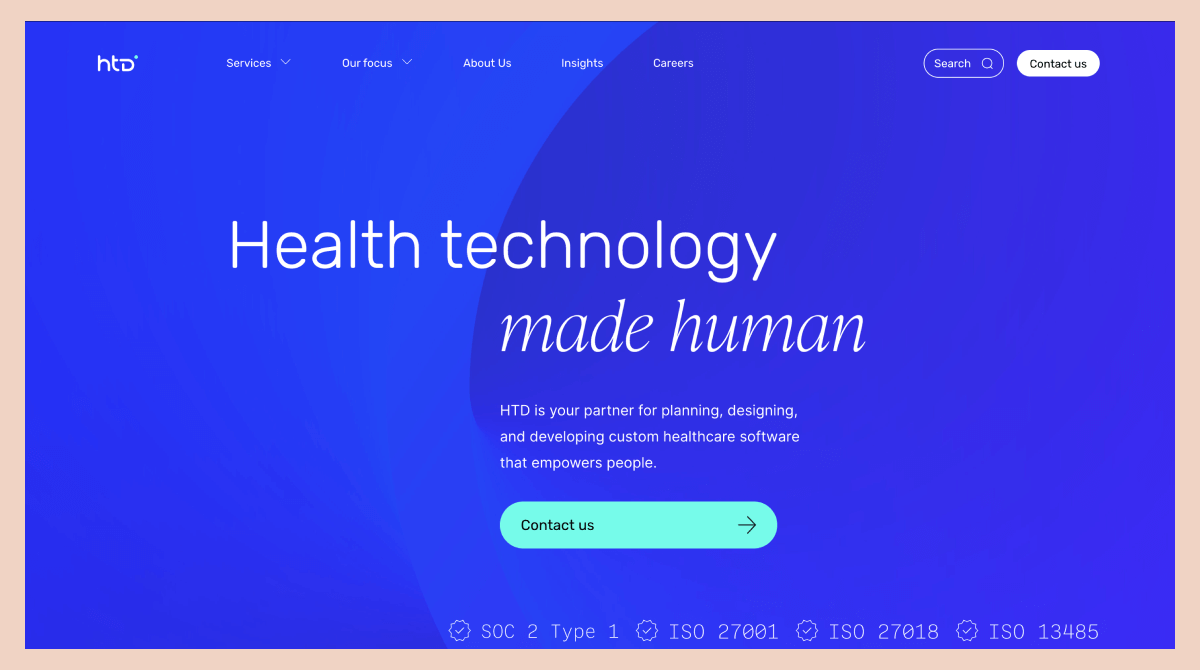
HTD Health is a custom healthcare app development company on a mission to build a healthier world by developing innovative solutions for healthcare organizations and medical professionals. Its team of 200+ tech experts implements a wide range of healthcare projects, including SaMD, virtual care platforms, SMART on FHIR applications, tools for administrative and clinical workflows, and other solutions.
Putting regulatory adherence and data security at the center of all development processes, HTD Health delivers applications that are both innovative and compliant. The company has over 250 projects under its belt, tailor-made for virtual care companies, healthcare enterprises, academic medical centers, healthcare SaaS companies, device companies, and venture studios.
Pros:
- HTD Health is recognized as a compliance-first engineering team.
- The company has documented success in delivering SaMD, virtual care solutions, FHIR-based applications, and clinical workflow software.
Cons and trade-offs:
- The minimum project size is $100K, which makes it less suitable for budding initiatives.
Empeek
Founded: 2015
Number of employees: 100+
Minimum project size: $10,000
Hourly rates: $25 – $49
Offices: US, Ukraine
Clutch rating: 4.9
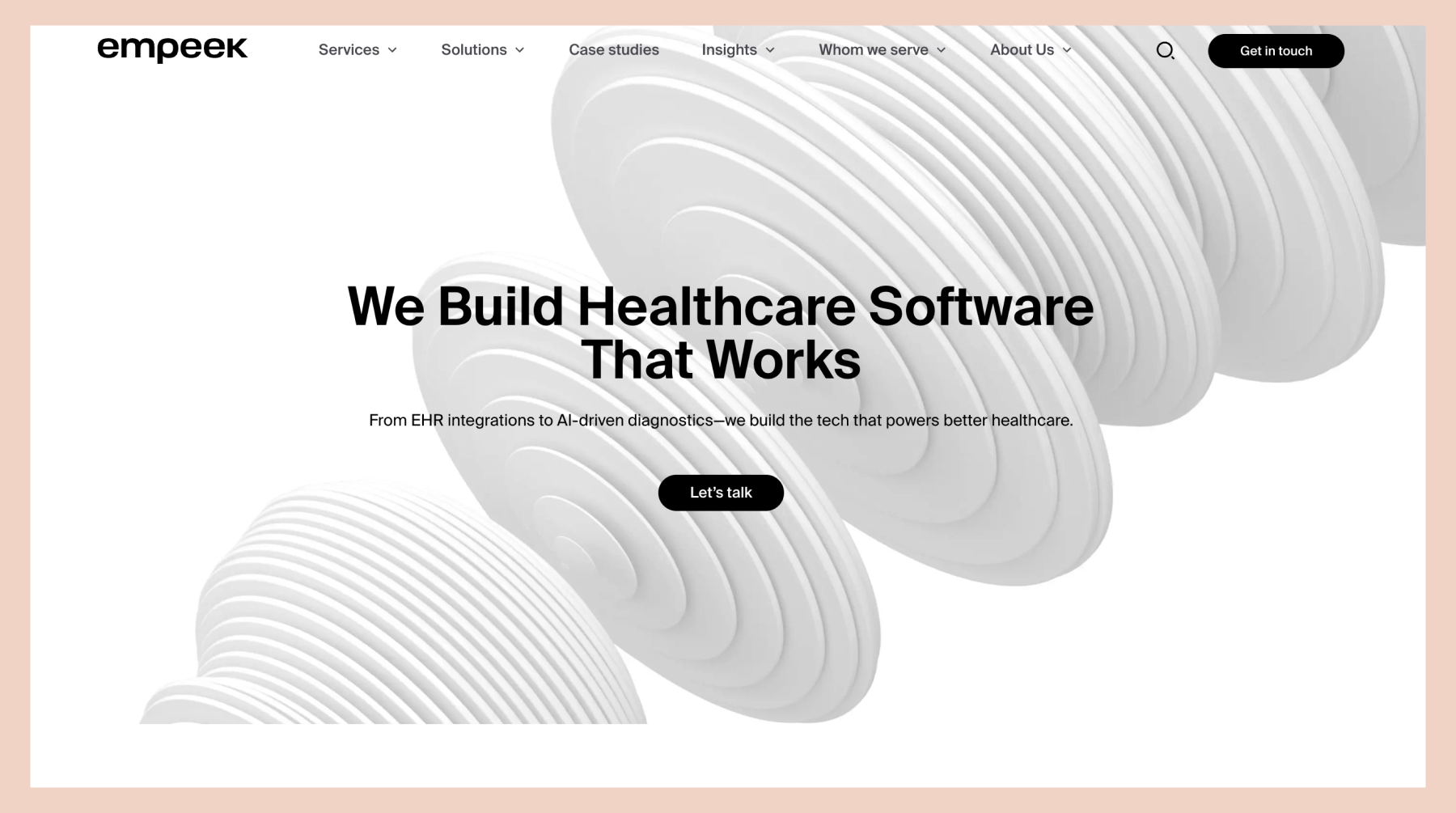
Empeek is an expert in the field of custom healthcare software development, helping health tech startups and medical facilities bring to life HIPAA/HITECH-compliant technology solutions. From practice management solutions to telemedicine app development and medical device software, Empeek knows how to build feature-rich healthcare mobile apps.
As for the security of healthcare applications, Empeek safeguards sensitive medical data by adhering to HIPAA and FDA security standards. Although the main focus of Empeek is on product development, the company also offers staff augmentation and dedicated team services. The company also helps established healthcare organizations modernize and upgrade existing healthcare systems.
Pros:
- Thanks to its deep specialized experience, Empeek's team is good for HIPAA/HITECH implementation work.
- The company offers staff augmentation, which might come in handy for rapid team extension.
Cons and trade-offs:
- Client reviews emphasize the team’s strong engineering quality, with opportunities to further elevate product design and user experience.
InventorSoft
Founded: 2015
Number of employees: 130+
Minimum project size: $10,000
Hourly rates: $25 – $49
Offices: Ukraine, Estonia
Clutch rating: 4.9
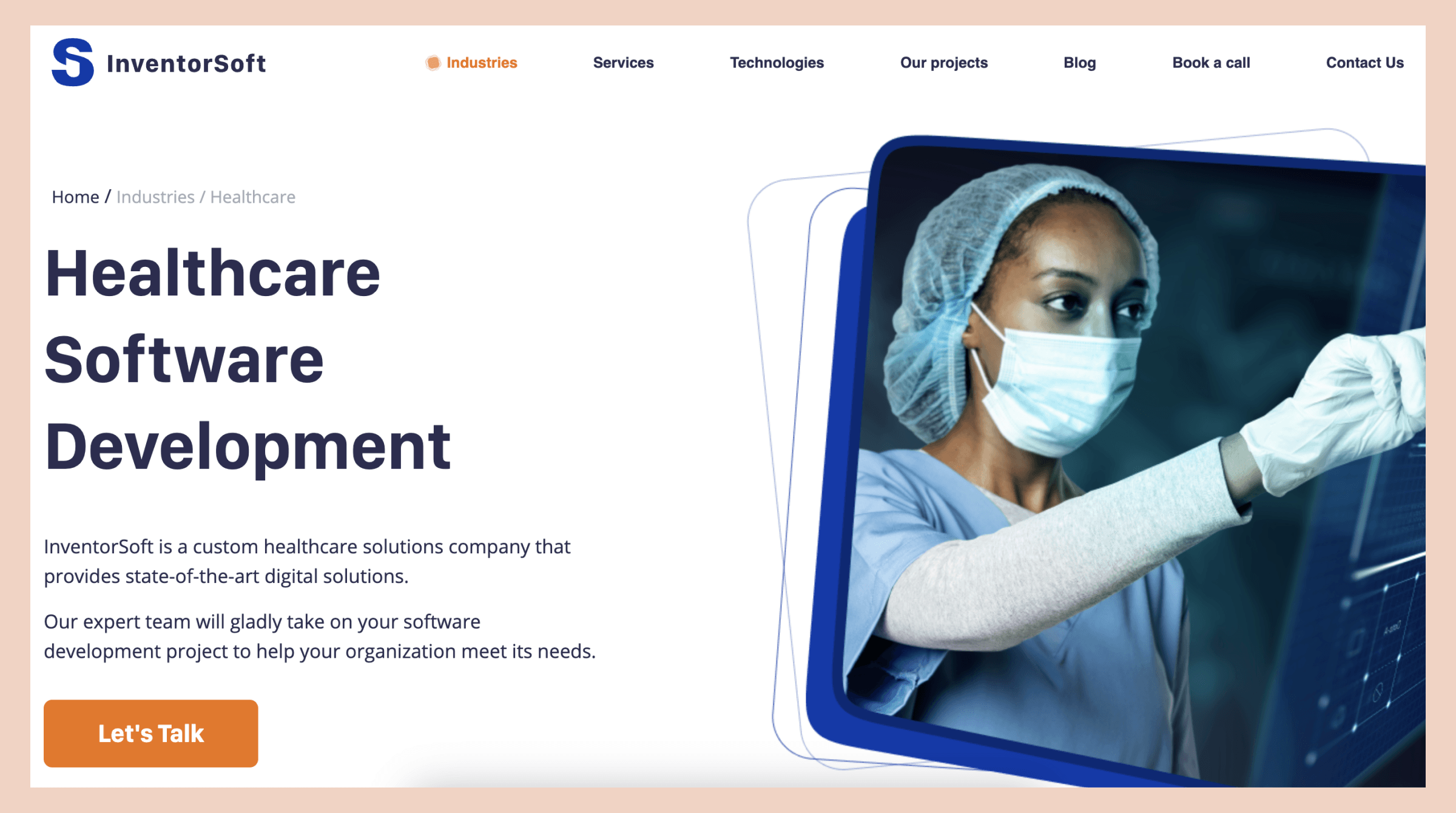
InventorSoft is a custom software development company specializing in healthcare and education technology. With over 11 years of experience, InventorSoft works as a dedicated development partner for SaaS companies and digital health startups, helping them scale from early-stage products to market leaders.
InventorSoft's tech stack centers on Java, Vue.js, React.js, Angular, Node.js, and .NET, with cloud deployments on AWS and Google Cloud. The team operates through a dedicated model, typically integrating with clients' existing in-house developers rather than running projects in isolation. Healthcare and education are their two core verticals.
Pros:
- Competitive rates ($25–$49) combined with a dedicated team model make InventorSoft an accessible option for health tech startups building their first product or scaling an existing one.
- Proven track record in healthcare and medical education software, which indicates domain consistency.
- Offers dedicated AI development services, including integration into existing healthcare products.
Cons and trade-offs:
- The dedicated team model favors long-term engagements, which may not align with organizations that need a defined-scope vendor for a single project.
Arkenea
Founded: 2011
Number of employees: 50+
Minimum project size: $50,000
Hourly rates: $50 – $99
Offices: US, India
Clutch rating: 4.9
With 14 years of specialized expertise in healthcare, Arkenea helps healthcare organizations, health tech companies, and Fortune 500 businesses develop HIPAA-compliant web and mobile applications. Arknea has a team of 50+ healthcare developers, analysts, UI/UX designers, and QA engineers who design, develop, and test surgical workflow platforms, nurse recruitment web platforms, EHR systems, telemedicine apps, remote patient monitoring apps, and other custom and customized solutions.
This healthcare app development agency also helps organizations benefit from the latest technologies, such as generative AI, data analytics, and others. Arkenea develops healthcare and medical software compliant with HIPAA, HITRUST, HL7, IEC 62304, DICOM, ICD-10, and other healthcare standards.
Pros:
- The company operates as a healthcare-only software development team.
- Arkenea has certified medical professionals and doctors on the team.
Cons and trade-offs:
- A total team strength of over 50 provides a solid delivery capacity. However, for larger-scale or highly complex projects, additional resources may be required to support rapid scaling.
KMS Healthcare
Founded: 2022
Number of employees: ~500
Minimum project size: Undisclosed
Hourly rates: Undisclosed
Offices: US, Vietnam
Clutch rating: 5.0
KMS Healthcare is the healthcare-focused division of KMS Technology, a leading provider of software development, testing services, and top-tier consulting solutions. As a healthcare tech expert, KMS Healthcare specializes in healthcare compliance assurance, SMART on FHIR app development, FHIR integration, and AI development.
KMS Healthcare serves a diverse clientele, including healthcare software companies, healthcare providers, life sciences organizations, investors, and more.
Pros:
- The company is a specialized healthcare software development partner, with longstanding expertise in the field.
- KMS Healthcare supports complex, compliance-heavy projects, including clinical trials, clinical decision support, and more.
Cons and trade-offs:
- KMS Healthcare was founded in 2022, so as a standalone healthcare division, it has a relatively short operating history.
- The company does not publicly disclose minimum project budgets or hourly rates, which can make initial budgeting and vendor comparison harder for clients.
Riseapps
Founded: 2016
Number of employees: 50+
Minimum project size: $50,000
Hourly rates: $50 – $99
Offices: Ukraine, Estonia, Poland
Clutch rating: 4.9
Riseapps is a healthcare app developer with 10 years of experience in mobile and web app development. Since 2016, Riseapps has been a trusted tech partner for multi-location clinic chains, B2B healthtech vendors, and D2C virtual care providers. Over the years, Riseapps has built over 150 ROI-positive architectural solutions and continues to create fit-for-purpose solutions that enhance patient care.
Besides medical app development services, companies can tap into the team's expertise to gain actionable advice on AI implementation, product re-engineering, and product growth. As for domain expertise, Riseapps delivers complex HIPAA-compliant telemedicine, RPM platforms, mHealth apps, medication applications, and e-prescribing software with full HL7, FHIR, and GDPR compliance.
Pros:
- Riseapps boasts deep AI healthcare expertise, including AI integration, AI development, and LLM pipeline deployment.
- Healthcare software development is the main and only focus of the company.
Cons and trade-offs:
- Team size is relatively small, which might be a deal-breaker for larger projects.
MEV
Founded: 2006
Number of employees: 100+
Minimum project size: $10,000
Hourly rates: $45 - $82
Offices: US, Ukraine
MEV is a software engineering company that leads with an important mission — building reliable, compliance-ready, and clinically proven tech tools for healthcare professionals, providers, and payers. The company runs on 20 years of hands-on tech experience and is particularly well-versed in healthcare data management. So, if you're looking to develop a HIPAA-compliant, FHIR-based, data-driven platform, MEV might be right up your alley.
MEV's development team has deep knowledge of healthcare data standards (HL7, FHIR, X12, NCPDP) and works within established security and compliance frameworks, including HIPAA, HITECH, ISO 27001, SOC 2, and FDA/MDR.
Pros:
- MEV demonstrates very strong healthcare data infrastructure expertise.
- The team has a nuanced understanding of the core healthcare regulations and data security standards.
Cons and trade-offs:
- When it comes to mobile healthcare app development, the company operates quite a limited tech stack.
How to choose a healthcare app development company: 5 tips
Bringing in an external development team can feel daunting, given the high-stakes nature of healthcare services. As a tech vendor ourselves, we understand the concerns around data security, software quality, and compliance. Based on our experience working with healthcare providers, medtech startups, and digital health platforms, here’s what truly moves the needle when choosing the right development partner:
Proven experience in healthcare app development
A can-do attitude is great, but it won’t cut it when it comes to healthcare projects. Choose a company with a deep understanding of your target audience and a proven track record in healthcare app development — ideally, that experience should also include projects similar to yours. Also, make sure the company is:
- Well-versed in relevant healthcare regulations (HIPAA, GDPR, FDA, MDR, and other regional mandates).
- Has deep knowledge of healthcare interoperability standards (HL7, FHIR, DICOM).
- Experienced in clinical-grade data handling (role-based access controls, audit trails, consent management, PHI de-identification, data minimization, and more).
- Competent in medical device regulations and software as a medical device (IEC 62304, ISO 14971, FDA 510(k) submission processes, etc.).
End-to-end development capabilities
You wouldn't want to switch tech vendors every time your project evolves into a new area of tech expertise. That’s why it’s crucial to choose a partner with well-rounded experience and the technical skills your project may need as it grows.
If you're developing a healthcare mobile app, make sure your tech partner has capacity for full-scale development, including design, testing, and post-launch support. Additionally, the company should offer complementary expertise in AI, IoT, data analytics, and other advanced technologies to future-proof your solution.
Transparent and documented processes
For most healthcare projects, documentation is essential — not just for internal clarity, but for regulatory compliance and future scalability. That's why your development partner should follow a clearly defined, well-documented healthcare app development process backed by a quality management system and proven governance frameworks.
This also includes:
- Adherence to standards such as ISO 13485 (for medical device software), ISO 9001 (quality management), or ISO 27001 (information security management).
- Comprehensive IP transfer agreements, source code access, and clear confidentiality clauses.
- Audit-readiness, meaning the team creates and maintains documentation for regulatory audits (design history files, technical files, validation protocols, etc.)
- Version control and traceability across code, documentation, and requirements.
Post-launch product support
A healthcare app development company worth partnering with should not only deliver an MVP but also support your product’s long-term growth. Make sure your potential partner can give a resounding 'yes' to the following questions:
- Does the company offer technical support post-launch?
- Can they scale the app as you gain more traction or expand features?
- Are they open to integrating your solution with EHRs, AI modules, or medical devices, when necessary?
- Do they provide performance monitoring and analytics to guide future improvements?
Cultural fit and collaboration style
No matter how talented or tech-savvy the vendor is, if they don't align well with your modus operandi, your collaboration will hardly be effective.
Look for a partner that:
- Understands your organizational goals, not just tech specs.
- Is proactive with communication and can operate well under pressure.
- Offers flexible collaboration models.
- Can scale the team up and down on demand.
Choosing the right custom software development company is a tough call to make
For those just getting started with healthcare app development, picking the best healthcare app developers is their first and most important task, trailing only the development itself. Myriad factors can tip the scales in favor of a particular company, including its tech expertise, domain experience, and cultural fit.
Need more guidance on how to select the perfect health tech software development company? Our guide offers valuable insights to simplify your decision-making process. In the meantime, our company can address whatever concerns you have about your health tech projects — or help you bring them to life.