EHR Integration Services
With 15+ years of healthcare software development experience, Orangesoft connects healthcare applications to Epic, Oracle Health, athenahealth, and 10+ other EHR systems. We build read-only and bidirectional integrations over HL7 FHIR R4, SMART on FHIR, and HL7 v2, to HIPAA standards and each vendor's review requirements.
Book a scoping call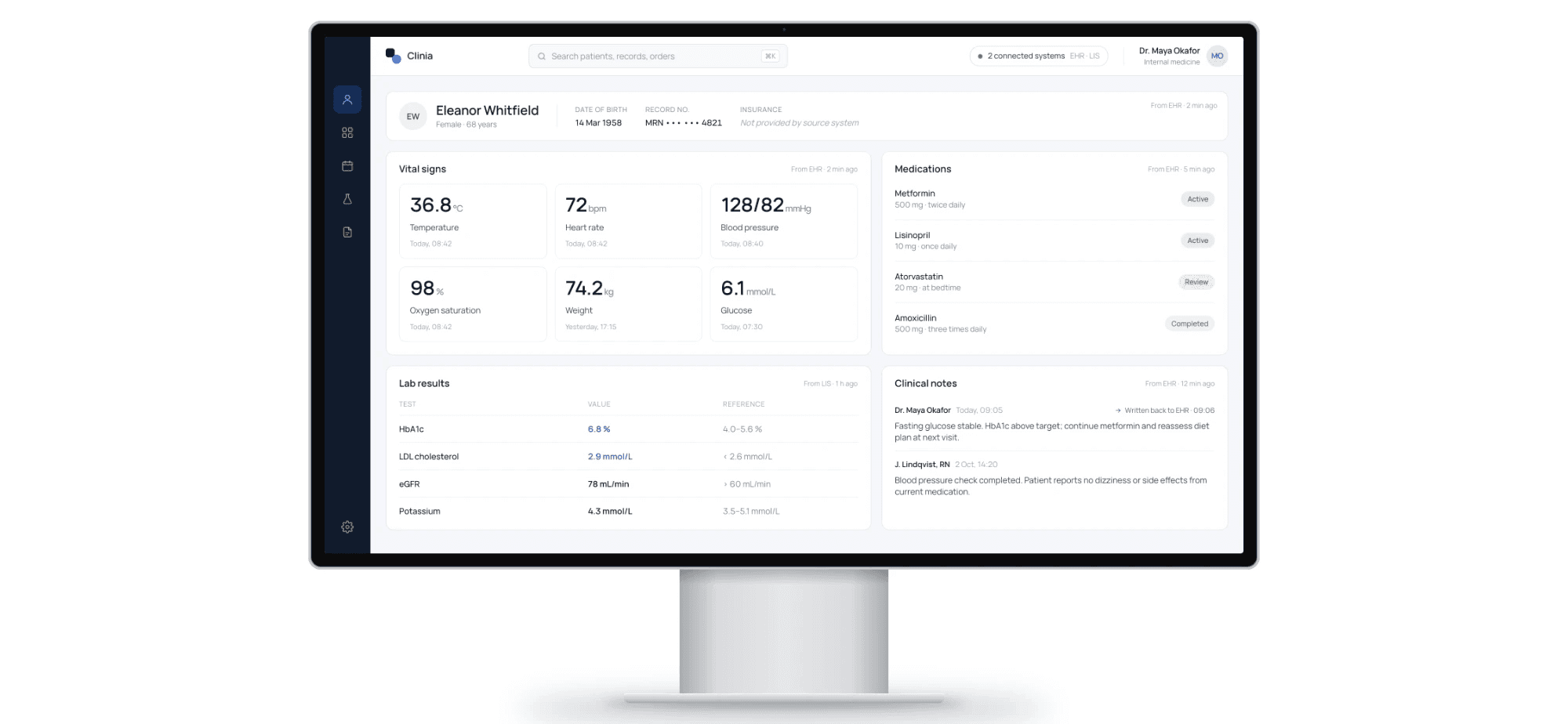
EHR integration that passes hospital security review
Every EHR integration moves protected health information between two systems. That movement is what a security review examines first.
Authorization runs on OAuth 2.0 and SMART on FHIR scopes, so your application gets the minimum necessary FHIR resources rather than the whole record. Transport runs on TLS 1.2 or higher, data is encrypted at rest, and every API call is logged. We sign a BAA before any PHI moves.
We answer the security questionnaires that come with each health system's review using documentation written during the build.
EHR integration services we offer
From a single read-only FHIR connection to a multi-EHR integration layer, our team can cover every stage of the work.

EHR integration consulting
Our lead developers and software architects help digital health companies and health systems plan EHR integrations before development starts. We select the integration approach and tech stack, define compliance requirements, and map data flows between your application and the record. We scope the vendor and health system approval track and confirm whether the organization running the EHR holds its own license before anyone commits to a date.

EHR integration for software
Our development team builds and maintains the integration layer between your application and the EHR. We implement FHIR R4 and SMART on FHIR connections, HL7 v2 interfaces, and the OAuth 2.0 authorization and audit logging a hospital security review expects. For platforms onboarding health systems one at a time, we handle per-site activation and monitor vendor API changes after launch.
How much does EHR integration cost?
Cost depends on whether you need write-back, which EHR you are connecting to, how many data types are in scope, and how many sites will activate the integration. Write-back is the biggest factor, because it adds clinical and security review, legal agreements, and more testing at every site.
Single EHR, read-only
$30,000–$55,000+
Scope
One EHR/EMR, standard API, read-only, HL7 FHIR
Bidirectional, one major vendor
$50,000–$100,000+
Scope
Write-back, vendor and health system approval, sandbox-to-production path
Interoperability layer
$95,000–$150,000+
Scope
Multiple EHR/EMR systems, mapping engine, HL7 v2 and FHIR, monitoring, many sites
Maintenance and per-site activation are scoped separately from the build.
These are indicative ranges based on our delivery experience.
A binding estimate follows a scoping call.
Book a scoping callA write-back EHR integration we delivered
Scope, team, and budget of the first release
Write-back integration with two EHR vendors for a digital health company, delivered in about four and a half months
- Budget, first release
- $101,560
- Timeline, first release
- 4.5 months
- EHR vendors
- 2
Team
2 integration engineers, 1 backend developer, 1 quality assurance engineer, 1 project manager, 1 product owner / business analyst.
These are indicative figures based on Orangesoft's delivery experience, not a commercial offer. A binding estimate is produced after a discovery phase.
Request free estimateDelivered solution
- Integration serviceHL7 v2 and FHIR R4 endpoints, a mapping engine between the product's data model and US Core profiles, terminology mapping across LOINC, SNOMED CT, RxNorm and ICD-10
- Vendor onboardingRegistration and app review with both vendor programs, SMART on FHIR launch, OAuth 2.0 scopes
- Bidirectional flowsPatient demographics, encounters and problem list inbound; observations, documents and care notes written back to the chart
- Reliability layerMessage queue, retry and dead-letter handling, nightly reconciliation jobs, monitoring dashboard, alerting on failed messages
- ComplianceHIPAA-aligned audit logging, PHI minimization, BAA-ready hosting, third-party penetration test
Additional costs for the future release
- Payer transactionsX12 electronic data interchange
- National networksCarequality and TEFCA connectivity
- Self-service mappingInterface for non-engineers
- On-premise interface engineDeployment option
Our clients say it better






Software we connect to EHR systems
Depending on the application and EHR capabilities, integrations may support read-only access or bidirectional data exchange. The implementation approach and complexity depend on the data requirements, workflows, and vendor-specific limitations.
Patient portals
Pull demographics, results and medications into a patient-facing view, and write appointment requests back to the record.
Telehealth platforms
Give the clinician chart context during a virtual visit, and write the encounter note back to the EHR afterward.
Healthcare CRM software
Push patient and encounter data into care coordination and outreach workflows, including Salesforce Health Cloud.
Clinical trial systems
Feed site-level patient data into EDC over FHIR, removing the manual transcription from source records.
Hospital management systems
Sync admissions, discharges, transfers, bed status, and scheduling against the EHR's ADT feed in real time.
Clinical decision support software
Deliver alerts and risk scores into the clinician's workflow through CDS Hooks, with suggested orders the clinician can accept into the record.
Financial and insurance management systems
Connect eligibility checks, claims, and remittance flows to clinical data over X12 EDI and FHIR.
Healthcare data analytics tools
Move electronic health records into a warehouse or analytics layer through Bulk FHIR export and HL7 v2 feeds.
Chronic disease management apps
Read longitudinal labs, medications, and conditions to drive care plans, and write adherence and outcome data back.
Laboratory information management systems
Route orders and results between the lab and the EHR over HL7 v2 ORM and ORU messages.
Medical IoT, wearables and RPM
Send device and wearable readings into the record as FHIR observations, with the thresholds clinicians act on.
Medical imaging and PACS software
Route imaging orders to RIS and PACS and return radiology reports to the record, linking DICOM studies to the right encounter.
EHR and EMR systems we integrate with
Epic integration
Epic holds the largest share of US hospitals, which makes it the system most digital health applications need to reach first. We build SMART on FHIR and backend FHIR R4 integrations, registered and tested on Epic on FHIR, including Epic's write APIs where the use case supports them. Clinician-facing and backend Epic apps go live one health system at a time, and write-back adds per-site clinical and security review, so we scope activation as its own track rather than a final step. Once an app is live, we support its Connection Hub listing on Epic Showroom.
Oracle Health integration
Oracle Health, formerly Cerner, holds the second-largest share of US hospitals. We integrate through the FHIR R4 APIs for the Oracle Health Millennium Platform, and through HL7 v2 interfaces for event-driven and high-volume feeds that FHIR does not cover.
athenahealth integration
athenahealth is one of the largest cloud-based EHRs in ambulatory and physician practice settings. We use its certified FHIR R4 APIs for read access, and the athenaOne APIs, available to Marketplace partners, for scheduling and other bidirectional workflows.
NextGen Healthcare integration
NextGen Healthcare serves specialty practices across more than 40 specialties, including behavioral health, OB/GYN, orthopedics and dermatology. We integrate through the NextGen Enterprise APIs, NextGen FHIR R4 APIs and HL7 v2 interfaces.
PointClickCare integration
PointClickCare is the leading EHR in long-term care and skilled nursing, with more than 21,000 long-term and post-acute care customers. We integrate as a Marketplace partner through its proprietary APIs, and through its FHIR R4 (USCDI Connector) APIs. Marketplace access requires mutual TLS with an X9 PKI client-authentication certificate. PointClickCare gives Marketplace partners a structured sandbox, which is still uncommon among post-acute vendors.
WellSky integration
WellSky serves more than 20,000 clients across home health, hospice, palliative care, personal care, long-term care, and behavioral health, and is one of the most widely used platforms among home health and hospice agencies. We integrate through the certified FHIR R4 API in WellSky Hospice & Palliative, C-CDA document exchange, and the WellSky Connect API for Personal Care. For other WellSky products, we agree on the integration path with WellSky and the client during discovery.
MedRight integration
MedRight is an EHR and eMAR platform for assisted living, skilled care, IDD, addiction treatment and residential youth programs, covering medication administration, care plans, assessments, ADLs and resident management. We work with MedRight on vendor-coordinated integration to bring resident records, medication administration status, and daily care data into caregiver-facing applications. Where a vendor offers no sandbox, we agree on a restricted test tenant with the vendor and the client and build that validation into the schedule from the start.
Other EHR and EMR platforms on request
MEDITECH Expanse · eClinicalWorks · Altera Digital Health and Veradigm (formerly Allscripts) · Practice Fusion · AdvancedMD · DrChrono · Greenway Health · Tebra (formerly Kareo) · ModMed
EHR interoperability standards we work with
EHR interoperability runs on a small set of standards, and picking the wrong one costs months. These are the ones we build against and when each applies.
HL7 FHIR R4
REST-based standard for healthcare data exchange and the default path for most new EHR connections. Used for most new work with Epic, Oracle Health, athenahealth and NextGen.
SMART on FHIR
Authorization framework built on OAuth 2.0 that lets third-party apps access EHR data, either launched inside the EHR with patient context or running standalone. Used for clinician-facing apps, patient-facing apps and backend services.
HL7 v2.x
Long-established messaging standard that still carries most real-time hospital traffic. Used for event-driven and high-volume hospital feeds, lab interfaces and pharmacy systems.
CDS Hooks
Delivers decision support into the clinical workflow at the moment a clinician acts in the EHR. Used for clinical alerts, medication guidance and checking prior authorization requirements (Da Vinci CRD).
USCDI
The standardized data set that certified US health IT must support, with USCDI v3 required since January 2026. Used for baseline scoping on any US integration.
C-CDA
Set of structured clinical document templates, including continuity of care documents, discharge summaries and referral notes. Used for transitions of care, referrals and care summaries.
DICOM
Medical imaging and PACS standard. Used for imaging software and image exchange with PACS and viewers.
X12 EDI (837/835/270/271)
HIPAA-mandated insurance and billing transactions (version 5010). Used for payer integration, eligibility checks, claims and remittance.
SNOMED CT · LOINC · RxNorm
Clinical terminologies for diagnoses, lab observations and medications. Used in any integration that normalizes coded data across more than one source.
Integration methods and architecture
There is more than one way to connect to an EHR, and the right one depends on data volume, real-time requirements, how many EHR systems are in scope, and whether you need a central data layer. Each option buys you something and costs you something.
FHIR REST API, direct
Best for a single EHR connection to a modern vendor. Fastest to build, but limited to what that vendor actually exposes through FHIR, which is less than the specification allows.
Bulk FHIR export
Best for population-level data such as patient cohorts, analytics and AI training. Pulls data for thousands of patients in one asynchronous request, but runs in batches rather than in real time and needs each health system to enable it.
SMART on FHIR app
Best for clinical tools that need to run inside the EHR workspace. Native to the clinician workflow, but requires app registration with each vendor and activation at each health system.
HL7 v2 interface engine
Best for established hospital connections and high-volume ADT or lab feeds. Battle-tested and fast at volume, but requires specialist HL7 v2 mapping and parsing work for each interface.
Integration platform (iPaaS or middleware)
Best for multi-EHR connections and complex routing logic. One connection to maintain instead of many, but a higher recurring cost, and you inherit the platform's data model.
CDS Hooks
Best for real-time decision support inside the clinical workflow. The standard way for an external service to surface guidance at the point of decision, but requires the EHR vendor to support the standard and each health system to configure it.
Delivery model matters as much as method. We evaluate webhook or event-driven feeds against scheduled polling for each vendor, and fall back to polling when webhooks are not offered or prove unreliable in practice.
We work alongside integration platforms
If you already run healthcare integration middleware or connect to a health data network, or you are evaluating one, we build the application layer on top rather than proposing a replacement.
Redox
We build applications that connect through the Redox network and its library of pre-built EHR connections. Redox handles normalization; we build the application logic above it.
Rhapsody
For teams running the Rhapsody integration engine, we develop and maintain HL7 v2 and FHIR channel configurations and custom message transformations.
Mirth Connect
For teams running Mirth Connect, including licensed 4.6+ versions and open-source forks, we build and maintain channels, transformers and the custom message routing between connected systems.
Health Gorilla
We build applications on Health Gorilla's clinical data network, a designated TEFCA QHIN, to pull lab results, diagnostic reports, and clinical records from multiple sources without building direct EHR connections.
e-Prescribing and payer integrations
Healthcare applications rarely stop at the EHR. Prescribing, eligibility, claims, and prior authorization each run on separate networks, with their own standards and approval processes.
e-Prescribing
Surescripts integration routes prescriptions to pharmacies through the national network. We also implement DoseSpot where a product needs embedded prescribing without its own connection.
Payer eligibility
We integrate Availity and Eligible for real-time eligibility and benefits verification over X12 270/271, so coverage is checked before the visit rather than after it.
Claims
We build claims submission and remittance over X12 837 professional and institutional and X12 835, connecting billing systems to clearinghouses and payers.
Prior authorization
We build against the FHIR Prior Authorization API that CMS-0057-F requires of impacted payers from 1 January 2027, including the Da Vinci workflow: CDS Hooks to check requirements, DTR to complete documentation, and PAS to submit the request.
What we ask every EHR vendor before scoping
Vendor capability varies more than the standards suggest, so we talk to the vendor before we estimate. Six answers usually tell us whether an integration will take weeks or several months before we commit engineering time.
The API documentation, how current it is, and the recommended integration approach.
Whether a sandbox exists, and how closely it mirrors the production environment.
Which data can be written back, and under what program or contract.
The authentication method, partner fees, and whether either changes by partnership tier.
Whether every site must activate the integration, and how long activation takes.
The realistic time from contract signature to pulling the first patient data.
The tech stack behind our EHR integrations
We select the stack around the EHR you need to reach and the volume of data involved, not from a fixed template.
EHR and EMR systems
Epic
Oracle Health
athenahealth
NextGen
PointClickCare
WellSky
MedRight
MEDITECH Expanse
eClinicalWorks
Altera Digital Health
Veradigm
Practice Fusion
Integration engines and libraries
Mirth Connect
Rhapsody
HAPI FHIR
InterSystems IRIS for Health
Redox
Health Gorilla
Cloud and infrastructure
AWS
Google Cloud
Azure
Docker
Kubernetes
RESTful APIs
Data, messaging and analytics
PostgreSQL
Microsoft SQL Server
MongoDB
Apache Kafka
RabbitMQ
Redis
Snowflake
Apache Spark
Tableau
Power BI
Our EHR integration process
We help you navigate the biggest challenges in EHR integration
Most EHR integration delays come from vendor policies, licensing, and data quality rather than code. Here is what we see most often and how we plan for each.
Book a scoping call
You may not own the integration you paid for
When a vendor or middleware provider builds your connection, the configuration and credentials often live inside their platform. Before signing, ask who owns the integration code, the API credentials, and the data mapping definitions. We deliver all three to the client.

Not every vendor has a real sandbox
In post-acute care, many vendors offer no real sandbox, so testing runs against a live or restricted production tenant under tighter change control. Sandbox data also rarely matches production one for one, and we re-validate the mapping after go-live.

The Community Connect trap
Under Epic Community Connect, smaller affiliates run on a larger health system's Epic instance without their own license. The parent system then controls app activation, API access, and security review. We check for this in the first scoping call.

Auth tiers and IP whitelisting
Authentication can differ by partnership tier: a marketplace integration may need mutual TLS with a client certificate where an API key covers basic access. IP whitelisting is often the longest lead-time item, so we request it the day a vendor is confirmed.

Rate limits you discover by hitting them
Throttling is often poorly documented, so we confirm limits early and build backoff and retry logic from the start. Fields a vendor exposes but does not always populate should show as not recorded, never as a zero or a blank card.

Patient identity matching
Each organization issues its own MRNs, so matching on MRN alone creates duplicate records as soon as data crosses an organizational boundary. We design matching logic around those failure modes, because a duplicate patient record is a clinical safety issue.
A reliable partner for EHR integration and healthcare interoperability
15+ years of healthcare software delivery, pointed at the part of an integration project that usually slips.





Integration experience
We have built production EHR connections across hospital, ambulatory, post-acute, and senior living settings. That experience is the difference between reading a FHIR specification and knowing which resources a given vendor actually populates.

Approval planned as its own track
We scope vendor and health system approval as a separate workstream with its own timeline and owner, because its duration is set by the vendor and each health system rather than by development speed.

Full handover
We deliver integration code, configuration, credentials, and documentation to you. If you move to another partner later, you take the work with you.

Compliance built into the architecture
Encryption in transit and at rest, access logging, minimum-necessary controls, and a signed BAA, designed into the integration layer from the first sprint.
Questions you might have
Schedule a free consultationWhat is EHR integration in healthcare?
EHR integration connects a third-party healthcare application to an existing electronic health record system so patient data, such as demographics, lab results, medications, and encounters, flows between them automatically, without manual re-entry. The connection runs on HL7 FHIR R4, SMART on FHIR, HL7 v2, or the vendor's own APIs, depending on the EHR vendor and the data involved.
What is the difference between EHR integration and EMR integration?
In practice, people use the terms interchangeably. EMR refers to the electronic medical records within a single practice or organization, while EHR refers to a record designed to be shared across organizations. Vendors and buyers use both labels for the same integration work, and the technical standards are identical.
How long does EHR integration take?
Read-only FHIR integrations with modern EHRs such as Epic or Oracle Health typically take 6 to 14 weeks from sandbox setup to production launch. Bidirectional write-back integrations take 4 to 12 months, because each health system runs its own clinical and security review before activation, and the timeline grows with the number of sites.
How much does EHR integration cost?
Most EHR integration projects range from $30,000 to $150,000 and up. A read-only connection to a single EHR typically costs $30,000 to $55,000. Bidirectional write-back with one major vendor runs $50,000 to $100,000, and an interoperability layer across multiple EHR systems and sites starts around $95,000. Cost is driven mainly by whether you need write-back, how many EHR systems and sites are in scope, and how many data types you need. Ranges are based on Orangesoft's delivery experience, so contact us for a project-specific estimate.
What is SMART on FHIR?
SMART on FHIR (Substitutable Medical Applications, Reusable Technologies on FHIR) is an open standard that lets third-party applications access EHR data securely, using OAuth 2.0 for authorization and HL7 FHIR for data exchange. Apps can launch inside the EHR with patient context, run standalone, or connect as backend services. Certified US EHRs, including Epic, Oracle Health, and athenahealth, must support it.
What is HL7 FHIR?
HL7 FHIR (Fast Healthcare Interoperability Resources) is a REST API-based standard for exchanging healthcare data, published by HL7 International. FHIR R4 is the version currently required for US certified EHR systems and is the default path for new EHR integrations.
What is the difference between HL7 v2 and FHIR?
HL7 v2 is a message-based standard used since the late 1980s and still carries most real-time clinical feeds, particularly ADT (admission, discharge, and transfer) notifications and lab result delivery. HL7 FHIR R4 is a modern REST API-based standard built for internet-scale exchange. Most new integrations use FHIR, while established hospital systems and high-volume lab interfaces often still run on HL7 v2.
What is EHR interoperability?
EHR interoperability is the ability of different electronic health record systems to exchange patient data and use it once received, without manual reformatting. It depends on shared standards for data exchange (FHIR, HL7 v2), document structure (C-CDA), and clinical terminology (SNOMED CT, LOINC, RxNorm).
What is an interface engine?
An interface engine is middleware that receives, transforms, and routes clinical messages between healthcare systems, most commonly HL7 v2 traffic inside a hospital. Mirth Connect, Rhapsody, and InterSystems Health Connect are among the most widely used. An interface engine is worth the infrastructure cost when you are connecting many systems; a direct API connection is usually better for a single integration.
Does EHR integration require HIPAA compliance?
In most cases, yes. When you exchange data with an EHR on behalf of a provider or health plan, you act as a business associate, and HIPAA's Privacy, Security, and Breach Notification Rules apply. That means a signed Business Associate Agreement, access controls, audit logging, and encryption in transit and at rest, which HHS treats as expected practice and has proposed to make mandatory. Consumer apps that patients connect on their own through patient access APIs usually fall outside HIPAA and instead fall under the FTC Health Breach Notification Rule.
Do you sign Business Associate Agreements?
Yes, we sign Business Associate Agreements for HIPAA-regulated data. A BAA is required whenever a vendor handles protected health information on behalf of a covered entity or another business associate, which applies to most EHR integrations.
Insights
See more FHIR vs. HL7: Key differences explainedCompare FHIR vs HL7 to understand how each standard supports healthcare data exchange, API integration, and modern interoperability needs.
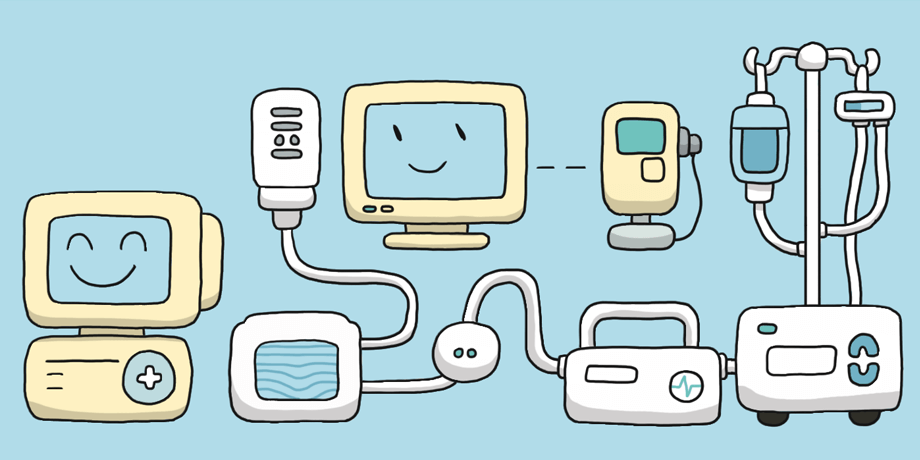 Medical device integration guide: Fresh perspective for 2026Discover how to integrate medical devices with healthcare systems. Learn best practices for middleware, FHIR & HL7 standards, data normalization and compliance.
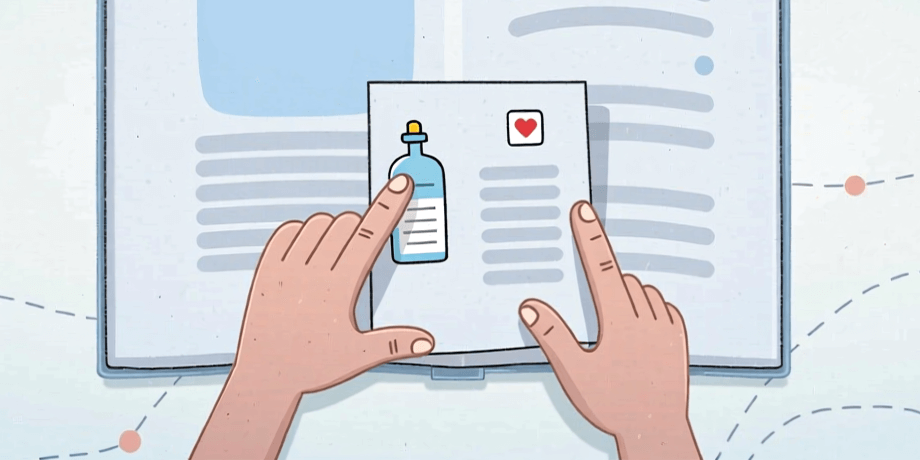 Patient portal development guide: Features, best practices and compliance considerationsDiscover how to build a secure, compliant patient portal with must-have features, real-world integrations, and a development roadmap for healthcare startups.
- 1. Intro callDuring a 30-minute call, our domain expert reviews your application, the target EHR, and whether your use case requires write-back.
- 2. Free discovery workshopTogether with you, our technical team defines the data scope, integration architecture, and vendor approval path.
- 3. Project planningWe provide the integration roadmap, timelines and estimates, including the vendor and health system approval track.